
Dylan Norman: Why I Started American Air Purification
My career has taken me from a mechanic at an aerospace shop to an engineer maintaining state-of-the-art critical cooling and power distribution systems. Along the way, I just so happened to learn how air, heat, moisture, pressure, and filtration work together. Here’s why that path led me to American Air Purification.
Take control of your indoor air quality.
Most people don’t think about the air in their home until something feels off. There may be too much dust in the air, a smell that won’t leave, dry winter air, sticky summer humidity, or allergies that seem to follow them from room to room. Then they start looking for answers and find a wall of products, lots of jargon, and advice that sounds a little shady.
I started American Air Purification because homeowners deserve clearer answers and my path here started long before I ever thought about building an indoor air quality company.
Respect The Details
One of my first technical jobs was at B/E Aerospace, where I worked as a mechanical technician in an ISO Class 5 clean aerospace assembly shop. It taught me pretty quickly that small details matter.
An incorrectly torqued connection, a poor fit, or a reading that is slightly off… can kill someone. You learn to follow a process, check your work, and understand why a part behaves the way it does.
You don’t just slap something together, certify it, and hope it sorts it out at 30,000 feet. That would be a fairly bad quality-control plan.
That job helped validate the way I think. I really want to know how everything is supposed to work and how everything works together.
That same thinking matters with indoor air quality. A product isn’t a complete solution just because it lights up, makes a noise, or has a shiny label. It must be designed for the right problem, installed in the right place, and used as part of the home’s full air system.
The Bigger Picture
After B/E Aerospace was acquired by Rockwell Collins, I joined my in-laws at Martin Refrigeration LLC and moved into industrial mechanical work. I worked around industrial HVAC and refrigeration equipment, blast furnaces, and large ammonia refrigeration systems. One of those ammonia systems served a facility that stretched across more than 30 acres underground.
It was not your average basement..
Industrial refrigeration forces you to look at the entire system. Temperature, pressure, airflow, refrigerant flow, electrical controls, pumps, fans, safety devices, and the building itself all affect one another.
A small change in one area may show up as a problem somewhere else. The part setting off the alarm may not be the part that caused the problem.
That lesson has stayed with me.
A home works the same way, even though the equipment is smaller. Dust may not be only a filter problem. High humidity may not be fixed by simply lowering the thermostat. An odor may be coming from a source that needs to be removed, not covered up. A powerful air cleaner may do very little if the air never reaches it.
You have to look at the house as a system.
Make Reliability Personal
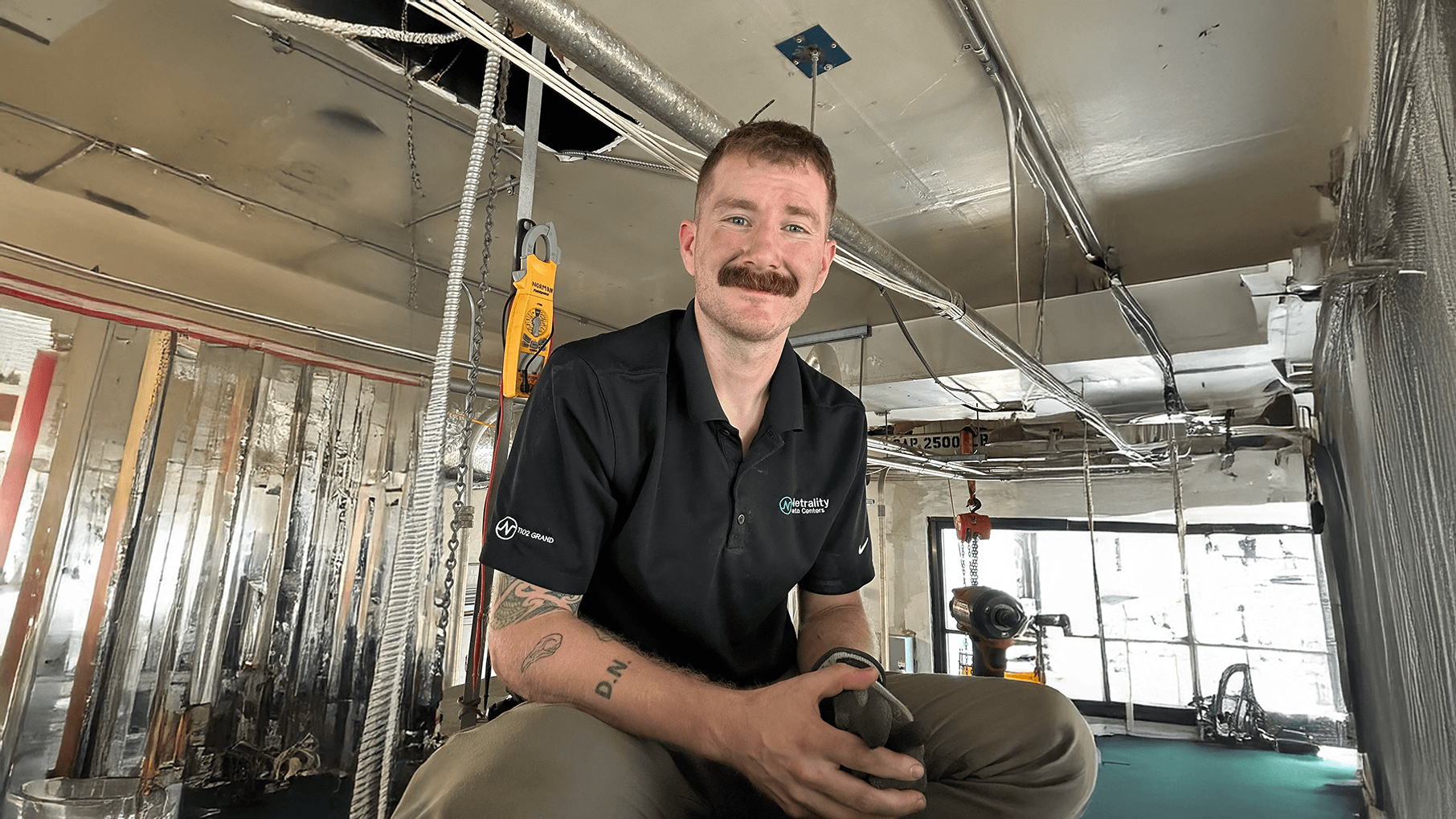
Today, I work as a Critical Facilities Engineer.
Critical facilities contain systems that can’t casually shut down for the afternoon while everyone figures out what happened. Cooling, electrical power, controls, alarms, backup equipment, and airflow must all work together.
The job requires me to watch how conditions change over time. A single number doesn’t always tell the full story. Temperature may look fine while humidity is moving the wrong way. A fan may be running while airflow is still too low. Equipment may be operating without doing its job well.
That kind of work makes you respect good data, something seriously lacking in residential HVAC.
A homeowner may buy a small monitor, see one high reading, and assume the house is trying to kill everyone before dinner. Sometimes there is a real concern. Other times, cooking, cleaning, showering, opening a door, or using a scented product caused a short spike.
The number matters, but the story behind the number matters more.
I Genuinely Love Physics
TBH: I freaking love the science behind HVAC.
The science matters because indoor air quality is not one single, visible problem. Indoor air can contain particles and gases from cooking, cleaning products, pets, smoke, building materials, outdoor pollution, and many other sources. Temperature, ventilation, and humidity also affect what happens inside a home and if these products will even make a difference.
That means “clean air” can’t come from one magic box.
The HVAC Industry Has An Education Problem
Homeowners are often introduced to indoor air quality when someone is trying to sell them something.
That doesn’t mean the product is bad. Many indoor air quality products can be very useful when they are properly chosen and installed. The problem is that the homeowner may not understand what the product does, what it doesn’t do, or why it fits their home.
The names don’t help much either.
IAQ, HEPA, MERV, UV-C, VOC, PM2.5, RH, etc. The industry loves a good acronym. We sometimes act like handing homeowners a bowl of alphabet soup counts as education.
It doesn’t.
Homeowners usually want clear answers to basic questions:
- Why is there so much dust?
- Why does my house smell bad?
- Why is it so dry or humid?
- How much does it cost to fix it?
The EPA lists source control, ventilation, and air cleaning or filtration as the three main ways to improve indoor air quality. Source control often comes first. If something is creating pollution, the best answer may be to remove it, repair it, seal it, or change how it is used.
A machine should not be asked to fix a problem that could have been stopped at the source.
Why I Built American Air Purification
I started American Air Purification to help close the gap between complex building science and the people who simply want a cleaner, healthier, and more comfortable home.
My goal is to make indoor air quality easier to understand so people don't waste their money.
I want homeowners to learn what dust, smoke, odors, humidity, biological growth, ventilation, and filtration actually mean inside a home. I want them to understand why one solution may help in one house but make little sense in another.
I also want them to know when they may not need a product at all.
American Air Purification isn’t supposed to be a product fan club. We don’t need to crown one technology the champion of air and send it into every house. A good indoor air quality plan may use source control, better filtration, humidity control, ventilation, air cleaning, or a mix of several tools.
ASHRAE’s residential indoor air quality standard also treats ventilation, local exhaust, source control, filtration, and air cleaning as connected parts of a larger plan.
The right answer depends on the home, the people living there, and the problem they’re trying to solve.
Homeowners Need Local Experts
Education online can take a homeowner a long way, but a website can’t inspect ductwork, test airflow, measure pressure, or see how equipment was installed.
At some point, many homeowners need a qualified professional. Preferably a local one.
That’s why American Air Purification is also building a network of Installation Partners. These are independent HVAC companies that can evaluate the home, recommend practical options, and install the selected solution correctly.
The reason this matters is because even a great product can perform poorly when it's incorrectly sized, poorly located, or added to a system that can’t support it.
Installation is part of the solution.
HVAC Companies Want To Help
I also built AAP for the local HVAC companies doing this work.
Many contractors already know heating and cooling very well. However, indoor air quality can be a difficult subject to explain. The science is broad, the products are different, and homeowners are more careful about big promises.
Homeowners want to know why a product works instead of only hearing marketing claims. That is exactly the kind of conversation I want AAP partners to be ready for.
Trust grows from there.
What I Want Homeowners To Expect
You shouldn’t need a mechanical engineering degree to understand your home’s air. You also shouldn’t be given a two-sentence answer to a problem that depends on the whole house.
We’ll tell you when a technology has limits. We’ll explain why maintenance matters. We’ll point back to trusted resources such as the EPA, ASHRAE, and other research-based organizations when a claim needs support.
This Is Only The Beginning
I’ve worked on all sorts of different equipment and it’s taught me that good solutions begin with understanding the problem as a whole. American Air Purification is my way of bringing that same mindset into the more personal side of the HVAC industry.
And, if I’m being completely honest, I started it because I could talk about the science behind air quality all day without getting bored. Just ask my wife.