Is Whole-Home HEPA Filtration Worth It?
Before you spend money on whole-home HEPA, make sure it fits the problem. I break down what these systems catch, how airflow affects results, and when a MERV 13 filter or portable air cleaner makes more sense for your home.
Take control of your indoor air quality.
Whole-home HEPA filtration can be worth it if you need to reduce airborne particles across your house. But buying the filter is only part of the job. Your air has to reach it, pass through it, and move back into your rooms.
That’s where I’d focus before spending the money. A filter’s rating tells you what it can catch. The setup determines how much air it can clean.
How Whole-Home HEPA Filtration Works
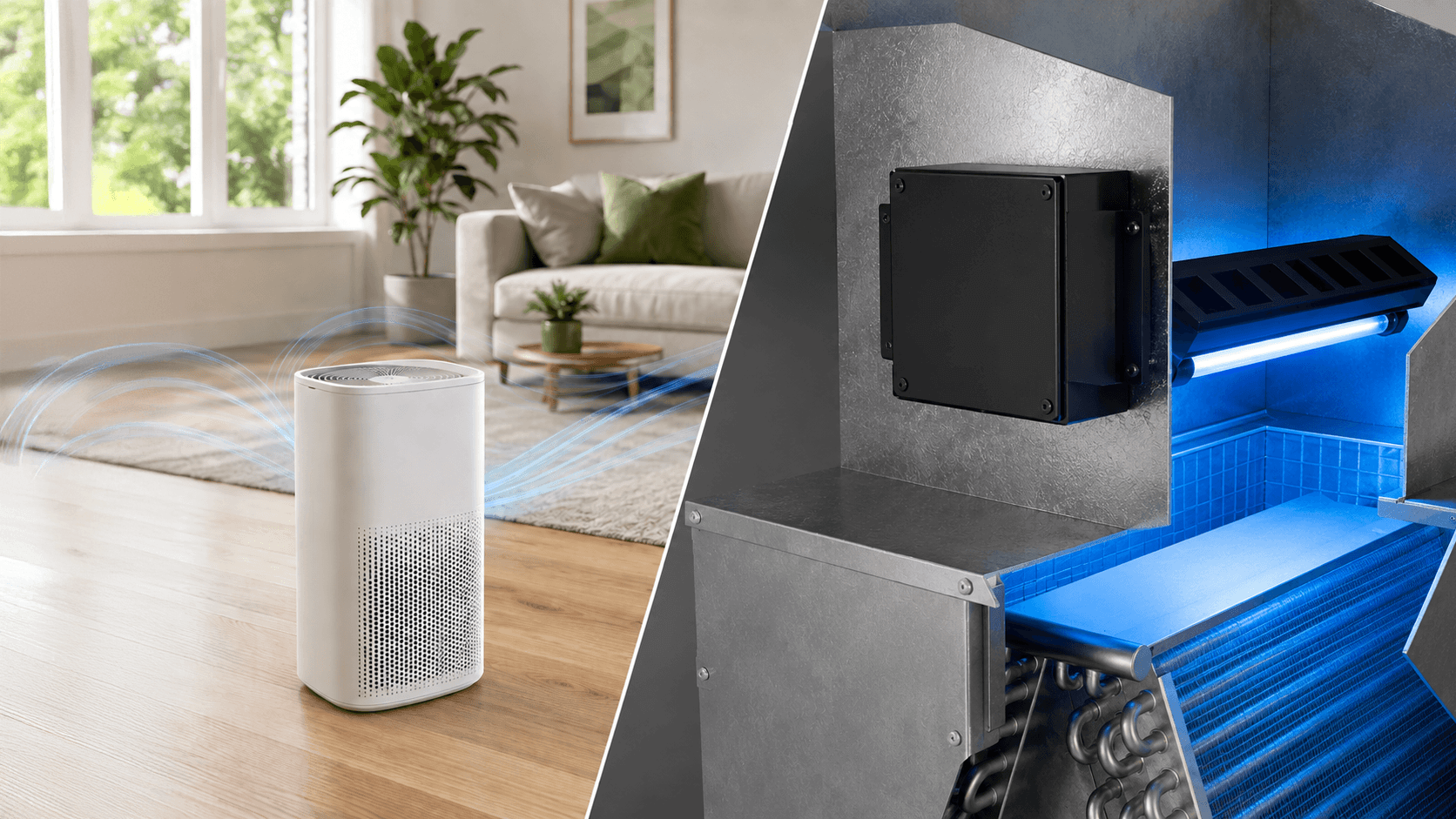
A common setup is a HEPA bypass unit. It connects to the return duct, which carries air from your rooms back to the furnace or air handler.
Its own fan pulls some of that air through a separate filter cabinet, then sends it back into the duct. The remaining air continues along the main duct. As air circulates, more has a chance to pass through the HEPA unit.
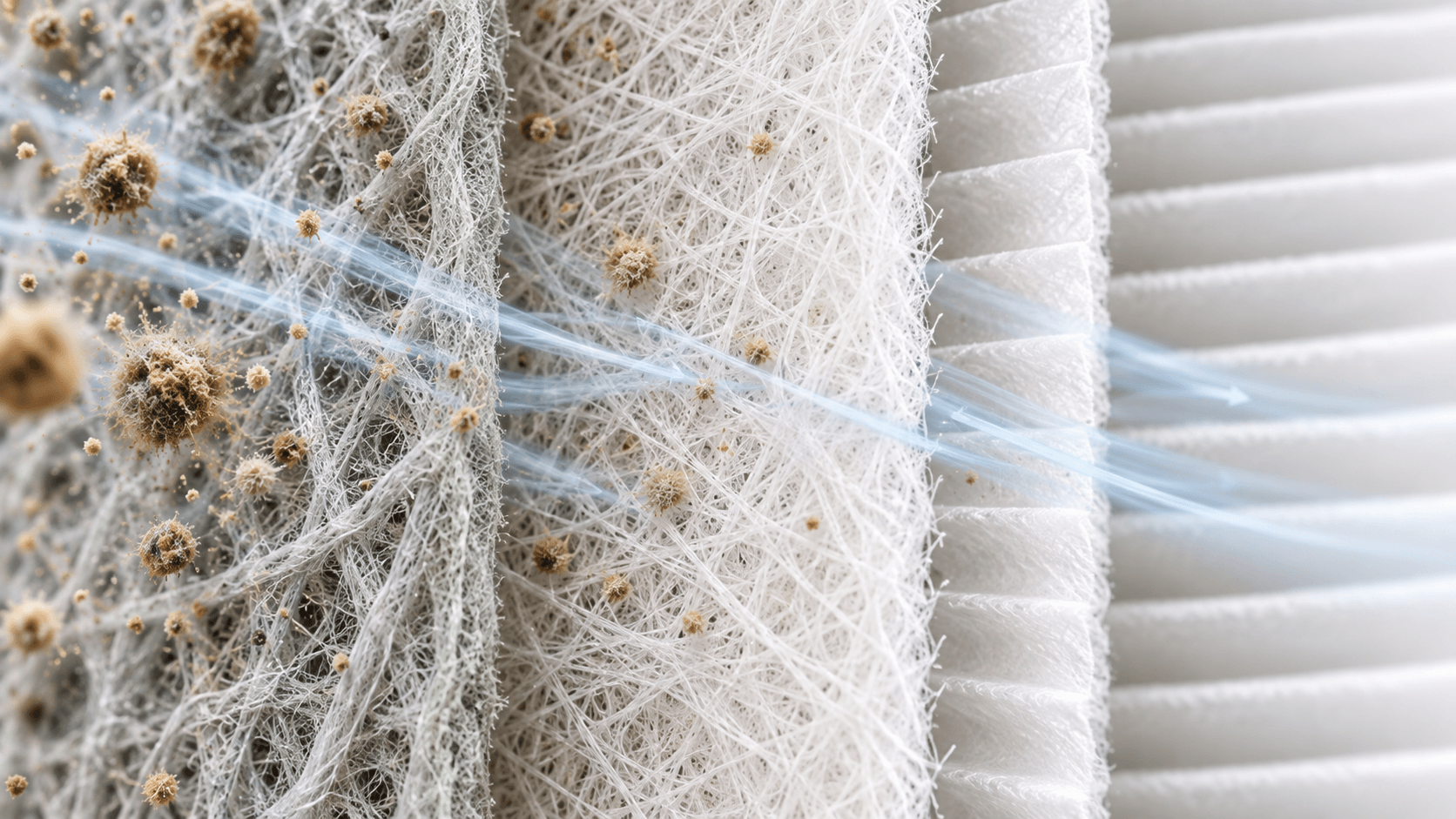
Inside the cabinet, a prefilter catches larger dust before it reaches the HEPA filter. The HEPA media traps much finer particles. Some models add carbon to help capture certain gases and odors. Filter Stages
This arrangement keeps the dense HEPA filter out of the main airflow path. Other designs use dedicated ductwork.
Fan runtime and room-to-room airflow matter, too. A closed bedroom with a poor return-air path may get less benefit, even while the filter runs. The installer needs to account for how air moves through your home, including the rooms where you spend the most time.
What the HEPA Rating Actually Means
HEPA stands for high-efficiency particulate air. A true HEPA filter captures at least 99.97% of particles measuring 0.3 microns under standard test conditions. It catches smaller particles, too. That size isn’t a cutoff where everything smaller slips through. HEPA Filter Performance
The filter contains a web of tiny fibers. Particles catch on those fibers as air moves through, including airborne pollen and pet dander.
But 99.97% describes performance through the filter. It does not mean 99.97% of the particles in your house disappear.
Dust already sitting on a shelf isn’t passing through anything. You’ll still need to clean.
What Filtration Won’t Fix
HEPA can catch smoke particles, but the HEPA media alone won’t remove smoke gases. Carbon is a separate part of that job, and its amount and type matter.
It also won’t lower humidity or fix mold growing behind a wall. If a basement smells musty because water is getting in, you need to solve the moisture problem.
I wouldn’t spend money on filtration while ignoring a leak.
Start with the source whenever possible. Filtration can support ventilation with clean outdoor air and other repairs. It doesn’t replace them.
Whole-Home HEPA vs. MERV 13 and Portable Units
Before buying, I’d compare these options.
Whole-Home HEPA
Worth considering when airborne particles are a problem across several rooms. Check the installation cost, how much air the unit filters, and what replacement filters cost.
MERV 13 HVAC Filter
A useful option for upgrading your central filtration. MERV 13 isn’t HEPA, but it can help capture smaller airborne particles. Have a technician check filter fit and airflow to make sure your HVAC system can handle it.
Portable HEPA
A practical choice for a bedroom or another room where you spend a lot of time. Match its clean air delivery rate, or CADR, to the room size. Also check noise levels and filter costs. A unit you turn off because it’s too loud won’t do much good.
If your main concern is one bedroom, I’d start there. Paying to cover the whole house may not be necessary.
What I’d Check Before Buying
Ask for an installed quote that includes duct changes and electrical work, if needed. Then get replacement filter prices and the change schedule for each stage.
Don’t assume the prefilter and HEPA filter need replacing together.
Electricity belongs in the budget, too. Ask whether the unit needs the HVAC blower running to move air throughout the house, and how the installer will check airflow after installation.
Check access, too. Changing a filter shouldn’t require taking half the closet apart.
My take? Whole-home HEPA is worth considering when you have a particle problem across multiple rooms and a system designed to address it. I’d want the quote to explain why that setup fits your home and what it will cost to keep running.