Candles, Cooking, And Cleaners: How We Pollute The Air Inside Our Homes
Your home can smell clean while the air is full of smoke, soot, and chemical gases. I explain how cooking, candles, and cleaners add pollution indoors, what I’ve seen settle on real surfaces, and the steps that actually reduce it.
Take control of your indoor air quality.

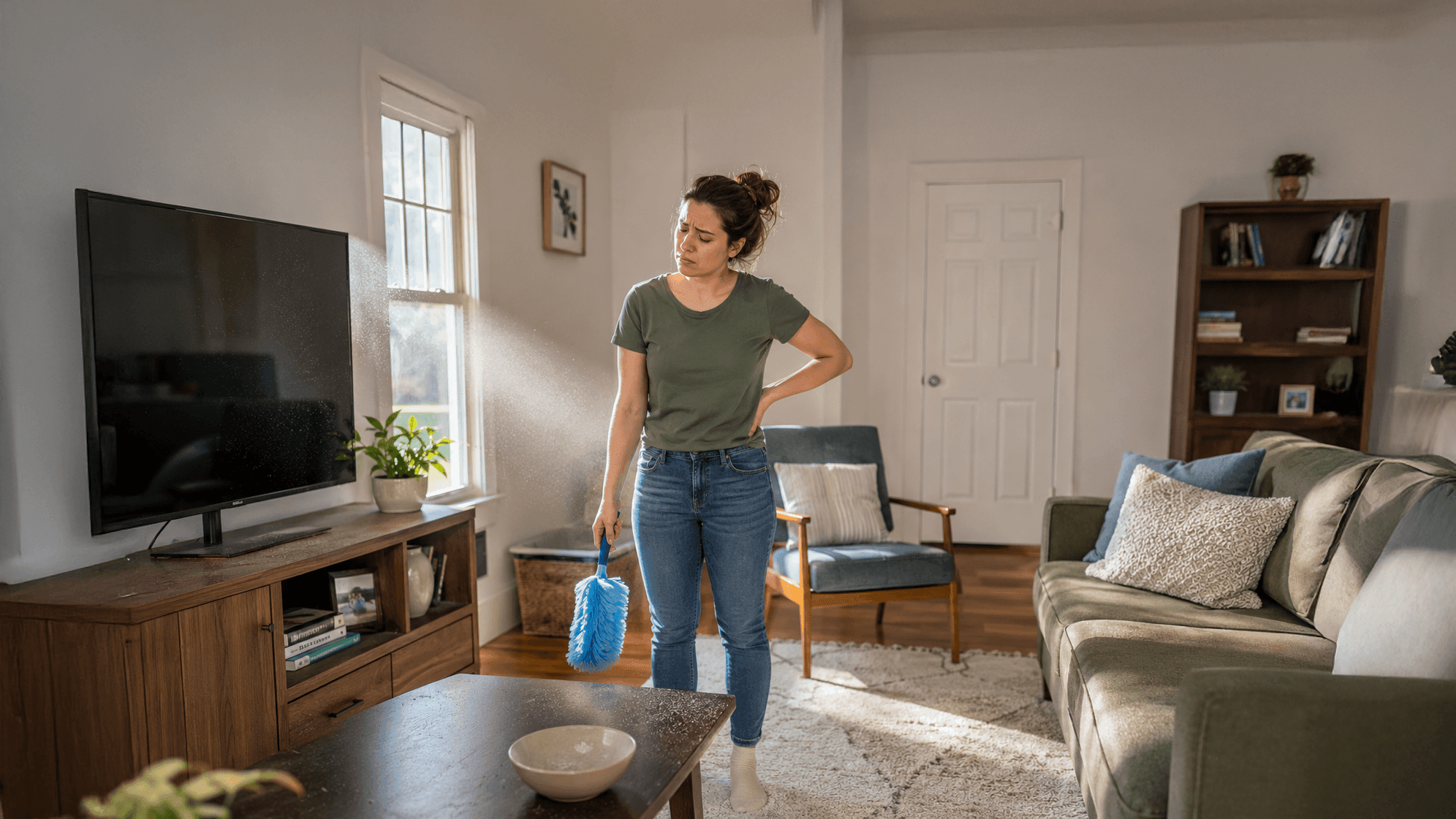
A vanilla candle is burning. Dinner is sizzling. The counter smells like lemon spray. The house feels clean…
But a smell is not an air quality test.
The Pollution We Make Indoors
Particles include smoke, soot, grease, and dust. Some are small enough to float for hours. PM2.5 is the name for very fine particles that can travel deep into your lungs.
Gases include volatile organic compounds, or VOCs. Cleaners, scents, and heated oil can release them. Some can cause irritation. The product, amount, and time you breathe it all matter. A strong scent doesn’t prove the air is dirty. It doesn’t prove the air is clean, either.
Cooking Can Create A Big Pollution Spike
Cooking is often one of the largest short-term particle sources in a home. The HOMEChem test-house study measured particles from cooking and other normal activities. High heat, frying, searing, burnt food, and smoking oil can send particles across the house.
Electric cooking still creates pollution because food and oil get hot. Gas and propane stoves add combustion gases, including nitrogen dioxide. Nitrogen dioxide can get to bedrooms and stay there for hours after a gas or propane stove is turned off.
Start the range hood before the pan gets hot. Let it run after you finish. A hood that vents outdoors works best. A recirculating microwave hood may catch some grease, but it sends the air back into the kitchen.
The best option is always an outdoor-vented range hood. You can also use a back burner, cover pans when it makes sense, keep oil below its smoke point, and clean the hood filter. If outdoor air is clean, a nearby open window can help.
Keep working carbon monoxide alarms in your home if you use fuel-burning appliances. Never use a gas stove to heat the house.
Candles Make More Than A Nice Smell
A candle is a small fire. It can release particles, gases, and soot. Even the EPA recognizes that candles are a major pollutant. A black ring around the jar or dark mark above it means some soot left the flame and settled nearby.
Burn time, room size, ventilation, and the way the flame burns all affect the amount released. Still, “natural wax” doesn’t mean the flame cleans your air.
It doesn’t.
Wax melts remove the flame, but they aren’t pollution-free. Scents from heated wax can react with ozone already indoors and form new tiny particles.
Use candles less often, keep burn times shorter, and stop using one that makes visible smoke or soot. If someone reacts to fragrance, the best scented product may be no scented product.
Cleaners Can Clean A Counter And Dirty The Air
Spray cleaners can put droplets into the air. Other products release VOC gases. Pine and citrus scents can even react with ozone to form more particles and formaldehyde, according to the EPA’s indoor particle guidance.
That sharp “clean” smell only proves you can smell the product.
Choose fragrance-free products when you can. The EPA Safer Choice database includes cleaners made with reviewed ingredients, including products that meet its fragrance-free rules. Follow the label, use only what you need, and bring in fresh air while cleaning when outdoor air is good.
Never mix cleaners. Disinfectants mixed with other cleaners can release dangerous vapors. More chemicals don’t mean more clean. Sometimes they mean a call to 911.
Use The Right Order: Control, Vent, Then Filter
- Control the source. Keep oil from smoking. Burn fewer candles. Stop spraying fragrance into the room.
- Capture and vent it. Use an outdoor-vented range hood. Open a window when the air outside is clean.
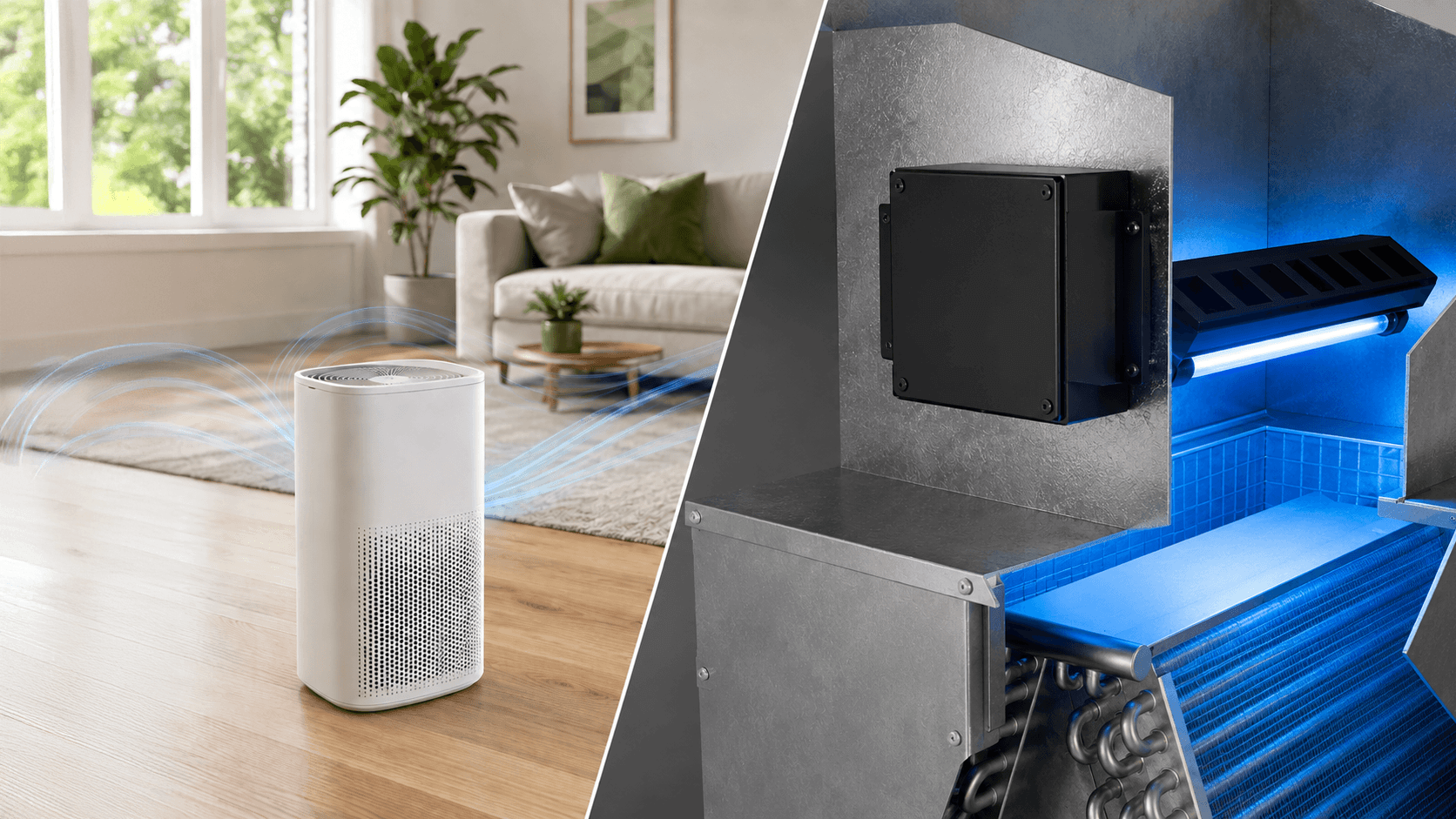
- Filter the rest. HEPA and high-efficiency HVAC filters handle particles. Activated carbon is used for gases and odors. One type doesn’t automatically handle both.
The EPA recommends HEPA for portable particle removal and MERV 13, or the highest rating the system can handle, for many central systems. Gas removal needs enough activated carbon or another filter made for gases.
Don’t stuff the most restrictive filter you can find into a one-inch slot and hope for the best. The blower, filter area, ductwork, and airflow all matter. Whole-home HEPA may need its own airflow path. Have the system checked before making a major filter change.
Filters only work when air moves through them. They also need to be changed before grease and dust load them up.
Signs Your Home May Need A Closer Look
Have the home evaluated if you notice:
- Dark marks near candles, ceilings, or air returns
- Odors far beyond the kitchen
- Filters turning dark much faster than expected
- Eyes, nose, or throat irritation that begins randomly
A low-cost monitor can show a pattern, but it can’t identify every chemical or diagnose a health problem. A qualified professional can inspect exhaust, measure airflow, check filter pressure, and decide what mix of source control, ventilation, and air cleaning makes sense.
Clean Air Doesn’t Need A Fragrance
You don’t need to live in a house with no cooking, candles, or cleaners. You do need to be honest about what they add to the air.
If every indoor air problem is answered with “buy this purifier,” that’s a little shady. Sometimes the first fix is a better range hood. Sometimes it’s a fragrance-free cleaner. In the home I described, a combined system helped reduce the particle load.
Find the source. Get as much of it outside as you can. Capture what’s left.