Why Does My House Smell Musty When the Air Conditioner Runs?
Your air conditioner turns on, the house gets cool, and suddenly it smells like a damp basement. That odor is often a clue that moisture is collecting somewhere it should not. This guide will help you narrow down the source and fix the cause instead of covering it up.
Take control of your indoor air quality.

When a musty smell shows up as soon as the air conditioner starts, it is easy to blame the AC. I have dealt with this when high indoor humidity and poor airflow were the real problems. The fix was not a spray. It was getting the moisture under control. That is why I want homeowners to treat odor as a clue. Sometimes it begins inside the system. Other times, the blower picks it up from another damp part of the house and moves it from room to room. Do not bury that clue under a plug-in fragrance. Then you just have a moisture problem that smells like lavender.
The Short Answer
A musty smell usually means moisture is sitting where dust, dirt, or building materials can stay damp. The source may be the evaporator coil, drain pan, condensate line, air filter, ductwork, basement, crawl space, or another wet area.
When the AC blower starts, it pulls air through the return ducts and sends it back through the supply vents. That moving air can carry the odor with it. The smell getting stronger when the AC runs does not prove that the AC created the whole problem.
It also does not prove that you have “toxic black mold.” A smell cannot tell you what type of growth is present. It can tell you that moisture deserves a closer look.
Why an Air Conditioner Makes Water
Your air conditioner does two main comfort jobs. It cools the air, and it removes some moisture from it.
Warm indoor air moves across a cold evaporator coil. Water in that air turns into drops on the coil, much like water forming on a cold glass. Those drops fall into a drain pan and leave through a condensate drain line.
That water is normal.
Water that backs up, leaks, or keeps nearby material wet is not. According to the U.S. Environmental Protection Agency, moisture control is the key to mold control. Cleaning growth without fixing the water source allows the same problem to return.
The Most Common Causes of a Musty AC Smell
High Indoor Humidity
High humidity can make the whole house feel cool but clammy. It also lets surfaces stay damp longer. Dust, wood, carpet, insulation, and other materials can begin to smell when they hold moisture.
The EPA suggests keeping indoor relative humidity between 30% and 50% when possible. A small digital humidity meter, called a hygrometer, lets you check instead of guess.
A Dirty Evaporator Coil
The indoor coil is cold, wet, and often dark while the AC runs. Dust can collect on it when filtration or maintenance is poor. Damp debris may support mold, bacteria, or other biological growth and create a musty or “dirty sock” odor.
A coil can look clean from one side while dirt is packed deeper inside. Proper cleaning may require opening the air handler, protecting electrical parts, checking the drain, and using a product made for that coil.
A Clogged Drain or Standing Water
The drain pan should move condensate toward the drain line. Slime, dirt, rust, poor slope, or a clog can leave water sitting in the pan. A cracked pan can also wet the cabinet, floor, or insulation around the unit.
Watch for water near the indoor unit, a full emergency pan, a wet ceiling, or an AC stopped by its float switch. Standing water needs attention even if the odor is mild.
A Dirty or Wet Air Filter
A dirty filter can reduce airflow and help the coil get too cold. If the coil freezes, melting ice may create more water than the drain system can handle.
A wet filter is never normal. Replace it, but do not stop there. Find out how it got wet.
Damp Ductwork or Wet Insulation
Ducts in an attic, crawl space, garage, or other unconditioned area may be surrounded by hot, humid air. A duct leak can pull that air into the system. Missing or damaged insulation can also allow condensation to form on cold duct surfaces.
Porous insulation is hard to save once wet and contaminated. The EPA notes that wet or moldy insulated duct material may need replacement because it cannot always be cleaned well.
An Oversized Air Conditioner
Bigger is not always better. An oversized AC may cool the house so fast that it shuts off before it removes enough moisture. This is called short cycling. The thermostat may show the right temperature while the house still feels damp.
Windows, insulation, air leakage, shade, climate, and the people in the home all affect AC size. A load calculation is better than copying the old unit's nameplate.
Airflow or Control Problems
Airflow affects both temperature and moisture removal. A blocked return, dirty filter, wrong blower setting, dirty coil, damaged duct, or poorly matched system can change how the coil works.
Too little airflow can freeze the coil. Too much may reduce moisture removal. The correct blower setting must be measured against the manufacturer's data.
Also check the thermostat fan setting. In many homes, “AUTO” is better for summer humidity than “ON.” A fan that keeps blowing after the compressor stops can move air over a wet, warming coil and put some of that water back into the house.
A Moisture Source Outside the HVAC System
The smell may begin in a damp basement, crawl space, wall, carpet, attic, or utility room. Plumbing leaks, roof leaks, poor exhaust, and outdoor air leaks can all add moisture.
Return ducts can pull odor from those spaces, especially if they leak. This is why cleaning the coil does not fix every musty smell. The whole air path matters.
Why the Smell Is Strongest When the AC First Starts
Odor can collect inside the air handler or ducts while the system is off. When the blower starts, that first push of air carries a stronger dose into the rooms. The smell may fade after a few minutes even though the source is still there.
Cooling also creates fresh condensation. If the coil, pan, or drain is dirty, each cycle can wet the problem again. A smell that returns during every cooling cycle is more useful for diagnosis than a one-time dusty odor after months without use.
What You Can Safely Check Yourself
You do not need to take the air handler apart to gather useful clues.
- Measure the Humidity. Put a hygrometer in a main living area away from vents, the kitchen, and bathrooms. Check it for several days. Repeated readings near or above 60% call for investigation.
- Check the Thermostat. Use the “AUTO” fan setting unless your system was designed and set up for another control plan.
- Look at the Filter. Replace a dirty filter with the correct size and type. If it is wet, call for service so the water source can be found.
- Check for Blocked Vents. Move furniture, rugs, and curtains away from grilles. Do not close many vents to force air elsewhere. That can create a new airflow problem.
- Look for Visible Water. Without removing live electrical panels, check around the indoor unit, drain pan, drain piping, vents, ceilings, and nearby floors.
- Follow the Smell. Is it strongest at every vent, one vent, the return grille, the air handler, or a damp room? That pattern can narrow the search.
- Use Exhaust Fans. Run bathroom and kitchen exhaust fans when adding moisture, and make sure they vent outdoors instead of into the attic.
What Not to Do
Do not spray fragrance, bleach, or an unknown “mold killer” into a return. You may spread chemicals, damage materials, or hide the odor.
Do not hire for duct cleaning based on odor alone. The EPA's duct-cleaning guidance recommends correcting leaks and moisture problems and checking the cooling coil, drain pan, and nearby insulation. If contaminated duct material is cleaned while the moisture source stays, the growth can return.
Do not expect an air purifier to dry a wet coil or empty a backed-up drain pan. The EPA's guide to home air cleaners explains that filters and portable air cleaners do not solve the moisture source behind mold and musty odors.
Source control comes first.
When to Call a Professional
Schedule an HVAC inspection if the smell keeps returning, indoor humidity stays high, airflow feels weak, the coil freezes, or you find water near the equipment. You should also call if the drain keeps clogging, duct insulation is wet, or the problem is hidden inside equipment you cannot safely access.
A good diagnosis may include:
- Measuring indoor temperature and humidity
- Checking the filter, blower, coil, pan, and drain
- Measuring system airflow and static pressure
- Checking refrigerant operation and coil temperature
- Inspecting duct leakage and insulation
- Reviewing thermostat settings and run time
- Checking whether the equipment is properly sized
- Looking for moisture sources outside the HVAC system
Large areas of visible growth or water damage may also require a qualified remediation or building professional. HVAC cleaning and building remediation are not always the same job.
Can an Air Purifier, UV Light, or Dehumidifier Help?
These tools can help when they match the actual problem. None of them should be used to skip the moisture repair.
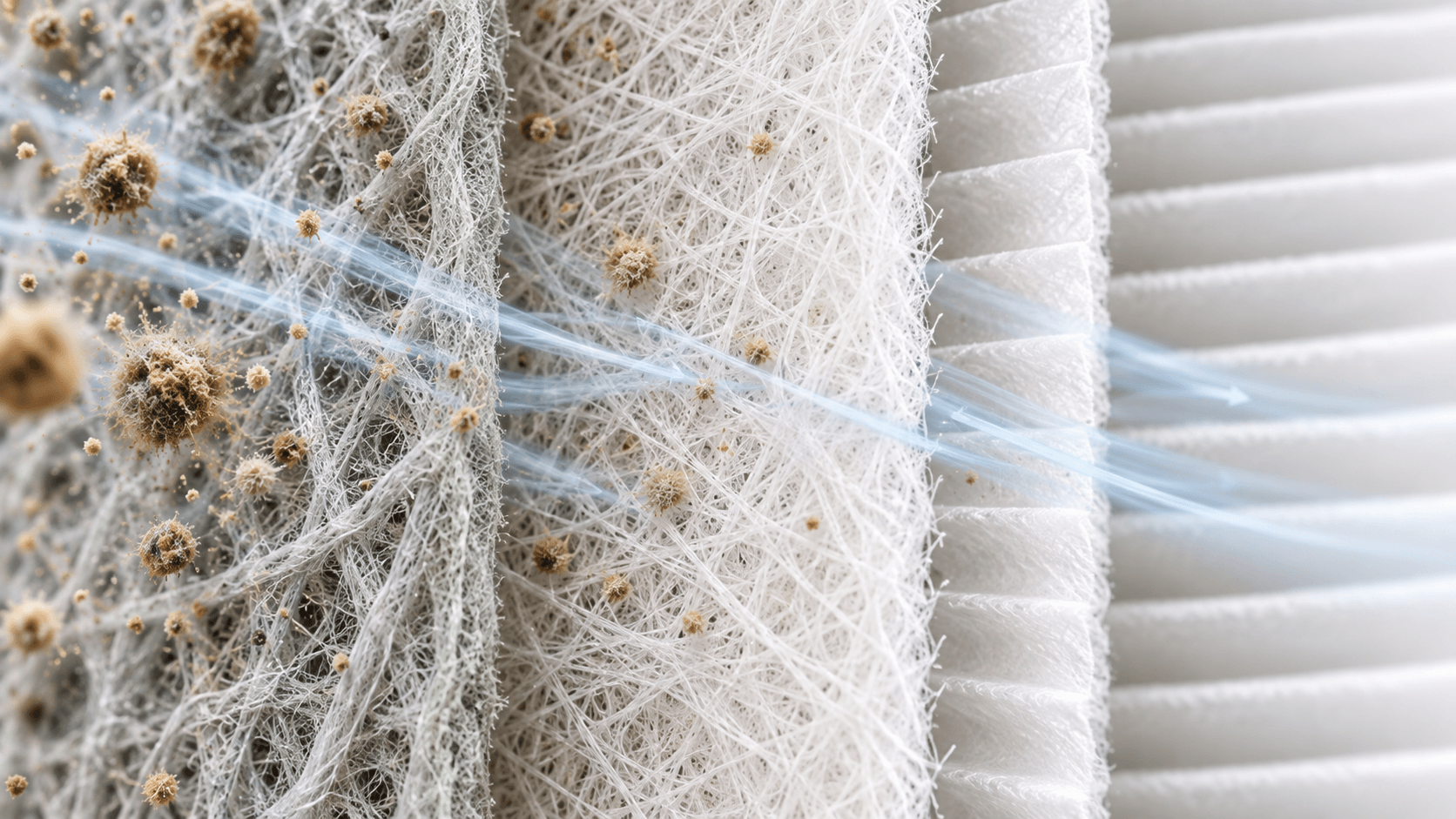
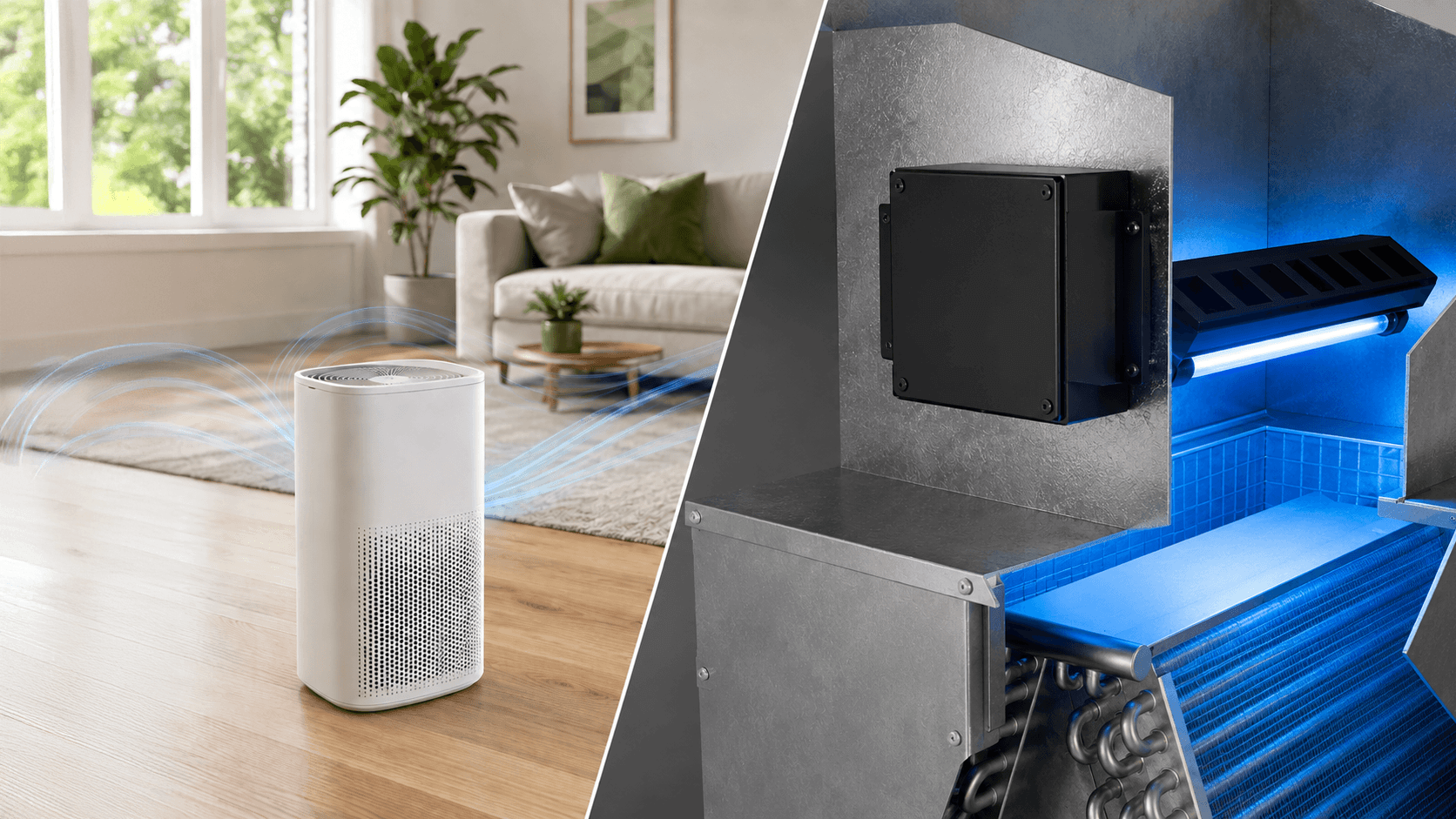
A better filter or whole-home HEPA system may capture more particles. A properly selected UV-C light may help control growth on the coil surface it shines on. It will not clean dirt, clear a drain, dry insulation, or treat areas the light cannot reach.
A whole-home dehumidifier may help when the AC does not run long enough to control humidity during mild, damp weather. First, check airflow, drainage, duct leakage, ventilation, and equipment operation. Adding another box to a broken system is still a broken system...now with another box.
Is a Musty AC Smell Bad for Your Health?
Some people have no reaction to damp or moldy spaces. Others may have a stuffy nose, sore throat, cough, wheezing, burning eyes, or a skin rash. People with asthma, mold allergies, weak immune systems, or chronic lung disease may face greater risk. The Centers for Disease Control and Prevention provides more detail on possible health effects.
A musty smell alone cannot diagnose a health problem or identify a type of mold. If someone in the home has breathing trouble or symptoms that concern you, talk with a medical professional and address the moisture problem promptly.
How to Keep the Smell From Coming Back
- Keep indoor humidity near 30% to 50% when practical.
- Change filters as needed for your home and filter type.
- Keep returns and supply vents open and clear.
- Have the coil, drain pan, drain line, and blower checked during maintenance.
- Repair plumbing, roof, foundation, and duct leaks quickly.
- Use bathroom and kitchen exhaust fans that vent outdoors.
- Keep the thermostat fan on “AUTO” unless a professional has designed a different setup.
- Do not accept “we sprayed something in it” as a complete repair.
The goal is not to make the odor disappear for a day. The goal is to remove the damp conditions that allowed it to form.
The Bottom Line
If your house smells musty when the air conditioner runs, start with moisture. Check the humidity, filter, thermostat setting, visible drain area, vents, and nearby rooms. Then pay attention to where and when the smell is strongest.
I have seen how correcting airflow and humidity can solve the real problem. That is why I am blunt about fragrance. It can make the house smell nicer for a little while, but it cannot dry a wet system, repair a duct leak, or remove hidden contamination.