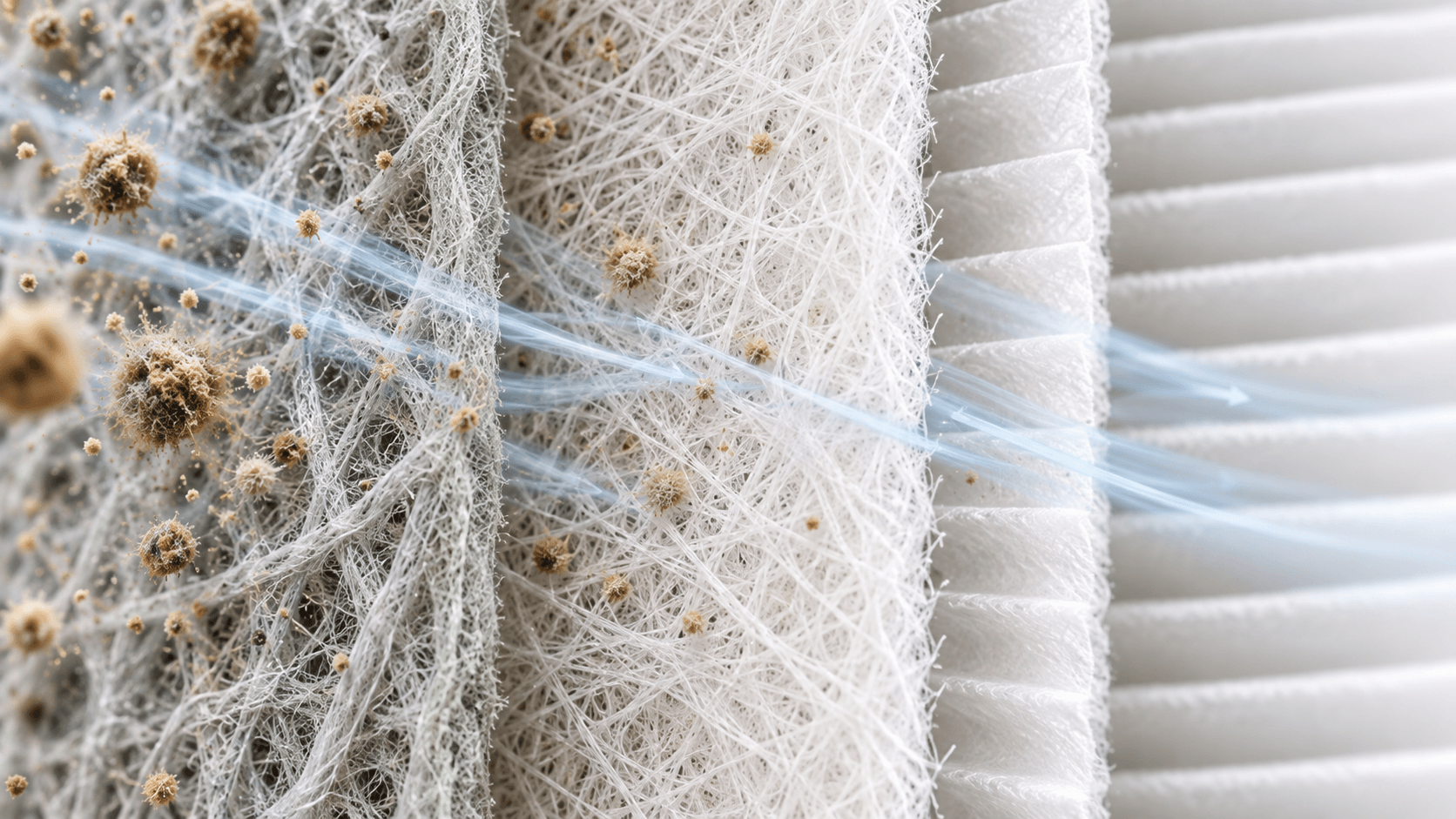
Portable Air Purifier vs. Whole-Home Air Purification
One purifier may clean a bedroom. Another can treat air moving through the whole house. I break down where each option works, what it costs, and why a loud restoration scrubber was not the right long-term answer for one of my customers.
Take control of your indoor air quality.
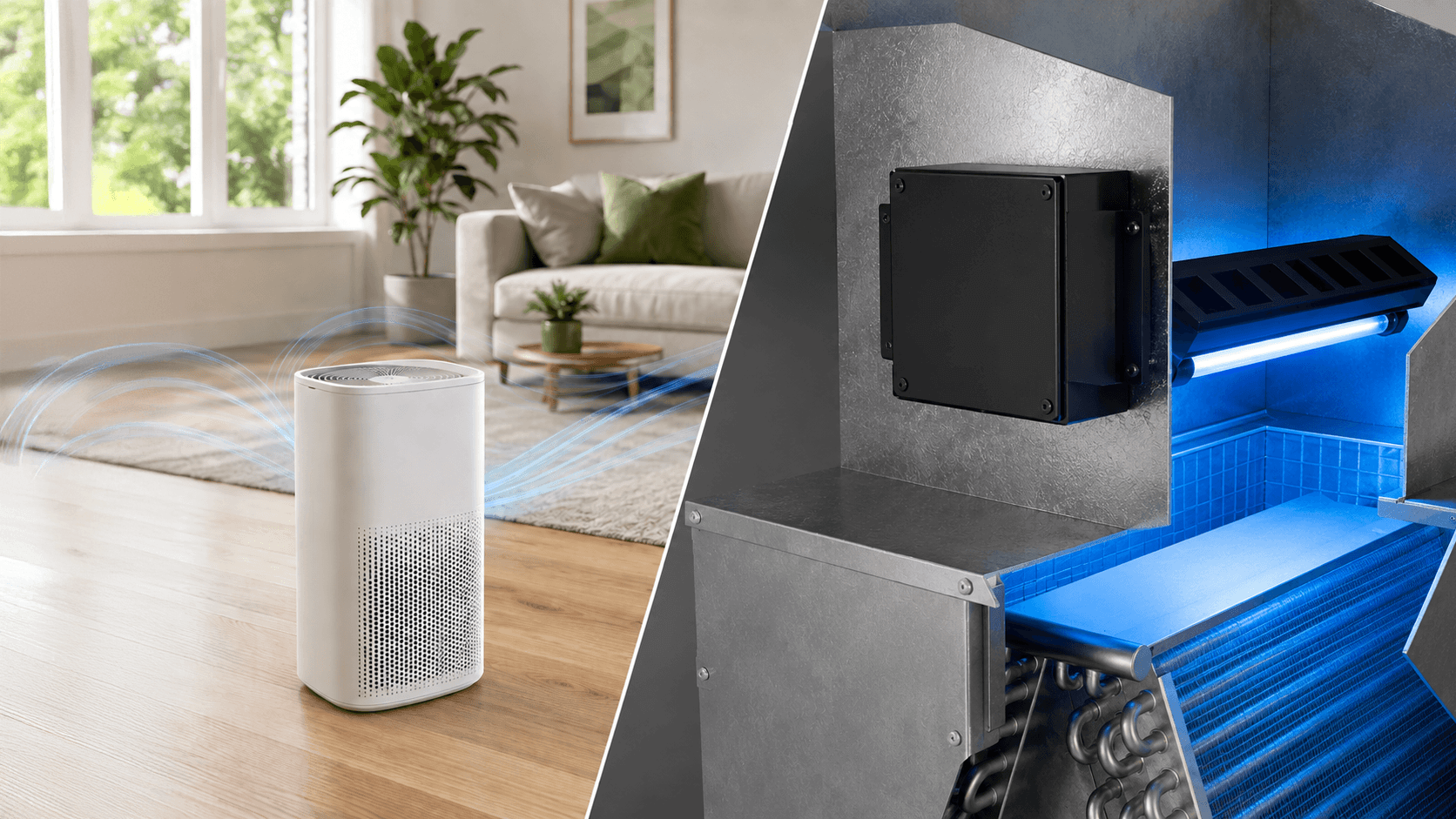
A portable air purifier can be great in the right room. A whole-home system can be better for a problem spread across the house. But those two products don't work the same way, and the words on the box can make the choice way more confusing than it needs to be.
I've worked with both types of equipment. Neither wins every time. The better choice depends on the pollutant, the space, and how long the problem may last.
The Quick Answer
Choose a portable air purifier when you need strong cleaning in one room, rent your home, have no central duct system, or need help right away.
Choose whole-home air purification when the issue reaches several rooms, you own a ducted home, and you want quiet, ongoing treatment without placing a machine in every room.
Sometimes the best answer is both: whole-home treatment for the base, plus portable HEPA in a problem room.
The Long Term Effect
I once worked with a customer after water-damage restoration. During the heavy cleanup, the customer had been renting portable Dri-EAZ-style HEPA air scrubbers. Those are not little bedroom purifiers. They are commercial restoration machines built to move and filter a lot of air.
They were the right tools during the cleanup.
Once the home was dry and damaged materials were handled, the job changed. The customer still wanted help with the leftover odor, but keeping the scrubbers was loud and expensive. It was a little like making a shop vacuum part of the furniture.
We installed an APCO-X in the HVAC system. It was not as powerful as the restoration scrubbers, and it did not need to be. The emergency work was finished. The goal was now to keep treating air throughout the home as the HVAC system ran.
I do not remember the exact bill. I am not going to make up a neat number for the story. Later, I use current public prices to show what a similar choice may cost today.
That job is one reason I care about teaching this. A homeowner should not keep paying for emergency-level equipment because nobody explained the difference between cleanup and long-term air treatment.
A Portable Purifier Is Not Always an Air Scrubber
A normal portable purifier is made for a bedroom or living area. A restoration air scrubber is a tougher machine made for water damage, smoke, mold cleanup, and construction dust.
For example, a Dri-EAZA HEPA 500 can move about 250 to 500 cubic feet of air per minute. It can use HEPA and optional carbon filters. One listing rates it at 73 decibels, so yes...you will hear it. Home Depot lists its current specifications here.
A consumer purifier may be quieter and nicer looking, but it usually cannot replace professional drying and restoration equipment.
How a Portable Air Purifier Works
A portable purifier has its own fan. The fan pulls room air through one or more filters, then sends the cleaned air back into that room.
A HEPA filter catches particles, such as dust, pollen, dander, mold spores, and fine smoke. Activated carbon handles some gases and odors. A thin carbon sheet may help, but more carbon gives it more room to hold gases.
Look for Clean Air Delivery Rate, or CADR. AHAM recommends a CADR equal to at least two-thirds of the room's square footage. A 300-square-foot room needs a smoke CADR of at least 200. High ceilings may require more.
Do not trust the coverage number alone. Some big numbers are based on only one slow air change per hour.
How Whole-Home Air Purification Works
A whole-home system connects to a central HVAC system. It uses the home's blower and ductwork to treat air that returns to the unit. That may cover many rooms without adding a separate fan to each one.
But "whole-home purifier" is a broad name. It may describe:
- A thick media filter for particles
- A UV-C light for the wet indoor coil and nearby surfaces
- Activated carbon or another gas-treatment material for odors and VOCs
- An electronic air cleaner
- A bypass HEPA system with its own airflow path
Those systems do different jobs. UV is not HEPA. HEPA is not odor control. One shiny product does not cover every problem.
The APCO-X combines UV-C with a carbon-based catalyst for odor-causing VOCs and biological contaminants. It does not dry wet materials or replace particle filtration. Fresh-Aire UV describes it as an in-duct air treatment system.
Portable vs. Whole-Home: The Main Differences
Coverage
A portable purifier mainly treats its room. Walls, closed doors, and weak air mixing limit it. One unit in the living room does not clean three closed bedrooms. It just doesn't.
A whole-home system treats air from several areas as the HVAC system runs. Coverage still depends on the ducts, return paths, and blower runtime.
Noise
Portable units need fans. Higher speed means more cleaning and more noise. If the sound makes you turn it down, the top-speed rating means little.
Whole-home equipment sits inside or near the HVAC system, so it adds little or no sound in the room. You will still hear the normal HVAC blower.
Particle and Odor Control
For dust, pollen, and fine smoke, a well-sized portable HEPA unit can be strong in one room. A whole-home media filter can help across the home, but it must match the HVAC airflow.
Odors can be gases, particles, or both. HEPA alone does not capture most gases. Look for real carbon or another gas treatment. The EPA's guide explains why particles and gases often need different filters.
Maintenance
A portable may need cleaning and new HEPA or carbon filters. Several units mean several cords and several blinking lights judging you.
Whole-home equipment also needs service. Media filters must be changed, and UV-C lamps lose output with age. APCO-X models use three-year lamps.
What Do Portable and Whole-Home Systems Cost?
Prices change by brand, room size, local labor, and filter type. These are planning numbers checked in August 2026, not quotes.
Consumer portable purifiers often cost $100 to $900 each. Many solid units fall near $200 to $400. Filters may add $50 to $200 per unit each year. Four or five units change the math fast.
Current Dri-Eaz HEPA 500-style listings show about $90 to $140 per day, $217 to $420 per week, and $462 to $1,120 per month. Delivery, taxes, and filters may cost more. See D&B Rentals, Allied Rental, and Vandalia Rental.
Whole-home systems vary because the name covers many technologies. Broad installed estimates often run from about $400 to $4,000.
Current APCO-X Ultra equipment is near $635 before labor. Installer pricing places it near $850 to $1,400 installed. One current offer is $877 installed and $997 normally. See Airstar Solutions, BACS HVAC Services, and Apollo Heating & Air Conditioning.
At those rates, one scrubber for three more months could cost $1,386 to $3,360. An APCO-X may reach rough break-even in one to three months. Two rentals get there sooner.
That is an example using today's prices. It is not my former customer's exact savings.
This is not an apples-to-apples test. The scrubber is built for restoration. The APCO-X uses HVAC airflow for lighter, ongoing treatment. The heavy work was done, so paying forever for extra power made no sense.
When a Portable Air Purifier Makes More Sense
A portable unit may be the better choice when:
- You only need help in one bedroom or office.
- You rent and cannot change the HVAC system.
- Your home has no central ductwork.
- You want extra HEPA cleaning during wildfire smoke or allergy season.
- You need a quick option with no installation.
- You can size the unit by CADR and will run it at a useful speed.
When Whole-Home Air Purification Makes More Sense
A whole-home system may fit better when:
- The concern is found across several rooms.
- You own a home with central ductwork.
- Noise and lost floor space matter.
- You want one system instead of several plug-in units.
- You are ready to maintain the HVAC filter, lamps, and other parts.
- A professional has matched the treatment method to the actual pollutant.
Fix the Source Before You Clean the Air
After water damage, an air purifier will not fix wet materials, growing mold, or hidden contamination. The source will keep producing more.
The EPA is blunt: stop the leak, dry the structure, and clean or remove contaminated material.
Air cleaning comes after source control, not instead of it.
If a musty odor returns or changes with rain and humidity, find out why.
What I Would Check Before Buying Either One
- Name the problem: particles, odor, VOCs, or moisture?
- Find the source. A purifier cannot stop a leak, remove soaked drywall, or make smoking indoors harmless.
- Measure the space. Use CADR for portable particle cleaners, not a vague "covers up to" claim.
- Count units, filters, lamps, labor, and service.
- Check the HVAC airflow. Use the highest MERV filter the system can safely handle, not simply the highest number on the shelf.
- Avoid ozone generators in occupied homes. Ozone is a lung irritant, not fresh mountain air in a metal box.
Frequently Asked Questions
Is a Whole-Home Air Purifier Better Than a Portable One?
It is better for broad, quiet treatment. A portable may clean one room more aggressively. The pollutant and space decide.
Will a Portable Purifier Clean My Entire House?
Usually not. Large open areas may share some cleaned air, but walls and closed doors limit movement. Most homes need several portable units for true room-by-room coverage.
Does HEPA Remove Odors?
HEPA captures particles. It does not remove most odor gases or VOCs. For gases, look for a purifier with enough activated carbon or another tested gas-removal material.
Can Whole-Home Purification Remove a Musty Water-Damage Smell?
It may help after the water, wet material, and contamination are handled. It cannot make active moisture or mold safe.
Does a Whole-Home Purifier Work When the HVAC Is Off?
Duct treatment needs blower airflow. A UV light may still shine on the coil while the fan is off, but it is not circulating room air.
My Bottom Line
Portable purifiers are not cheap toys, and whole-home systems are not magic boxes. Both can work very well when they are used for the right job.
For one room, start with a properly sized portable unit. For an issue spread through a ducted home, compare the long-term cost and coverage of a whole-home system. After major water damage, use restoration equipment for restoration, fix the source, and then step down to a quieter long-term plan when the heavy work is truly finished.
That is the choice I helped my customer make...and it is still how I explain it today.