What Is Indoor Air Quality and How Does Your HVAC System Affect It?
Your home can feel comfortable and still have poor indoor air quality. Dust, moisture, odors, gases, and outside pollution all play a part. This guide explains what your HVAC system can fix, what it can’t, and where homeowners should start.
Take control of your indoor air quality.
Most homeowners think their HVAC system heats, cools, and cleans the air. I get it. If the house is 72 degrees and there’s a filter in the furnace, the air should be fine...right?
Not always.
Your HVAC system has a major effect on indoor air quality, but it’s only one part of the home. Clean air depends on what enters the house, what gets created inside, how air moves, and how well moisture is controlled.
What Is Indoor Air Quality?
Indoor air quality, often called IAQ, is the condition of the air inside and around a building. It includes anything that may affect the health or comfort of the people inside.
That means IAQ is about more than dust. It can include:
- Pollen, pet dander, and smoke
- Mold spores and other tiny particles
- Odors and chemical gases
- Carbon monoxide and radon
- Indoor temperature
- Humidity
- Air movement and ventilation
There isn’t one perfect “clean air” number that covers all of this. A monitor may show low dust levels while missing radon, carbon monoxide, or a hidden moisture problem.
The EPA says most people spend about 90% of their time indoors. That makes the air inside your home worth paying attention to.
What Gets Into the Air Inside a Home?
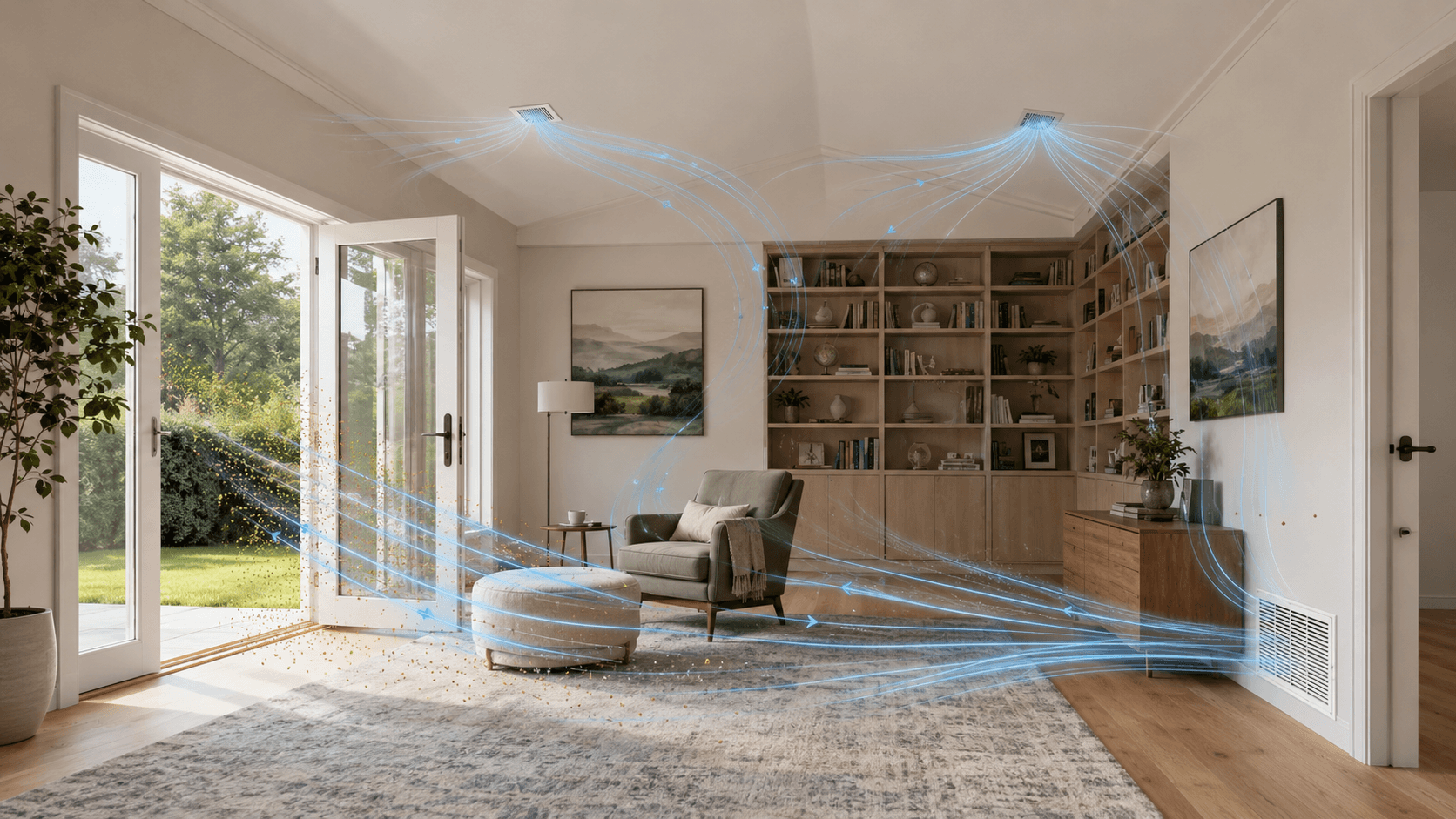
Indoor air doesn’t stay sealed off from the world. Outdoor air enters through doors, windows, cracks, exhaust fans, and ventilation systems.
Pollution can also come from inside the home.
Cooking can create smoke, grease, moisture, and fine particles. Cleaning products, paint, furniture, candles, air fresheners, and stored chemicals may release gases called volatile organic compounds, or VOCs.
Pets add dander. People add moisture and carbon dioxide just by breathing. Water leaks can support mold growth. An attached garage may allow fumes to enter the home.
According to the EPA’s guide to indoor air problems, the main causes are pollutant sources, poor ventilation, and high temperature or humidity.
Your home is always producing, collecting, and moving something through the air. Sometimes it’s harmless. Sometimes it’s worth fixing.
How Does an HVAC System Affect Indoor Air Quality?
A normal forced-air HVAC system works in a loop.
Air enters the return grille. It passes through a filter and the furnace or air handler. The system heats or cools it, then sends it back through the supply ducts.
Most of that air came from inside the house.
The “V” in HVAC stands for ventilation, but many residential systems don’t bring in controlled outdoor air. The blower may be moving the same indoor air around again and again.
Your HVAC system can still affect IAQ in four major ways.
1. It Circulates Air
The blower mixes air from different parts of the home. This can help reduce hot, cold, or stale areas.
It can also spread dust, odors, smoke, and other pollutants from one room to another. Air movement is useful, but moving dirty air faster doesn’t make it clean.
2. It Filters Particles
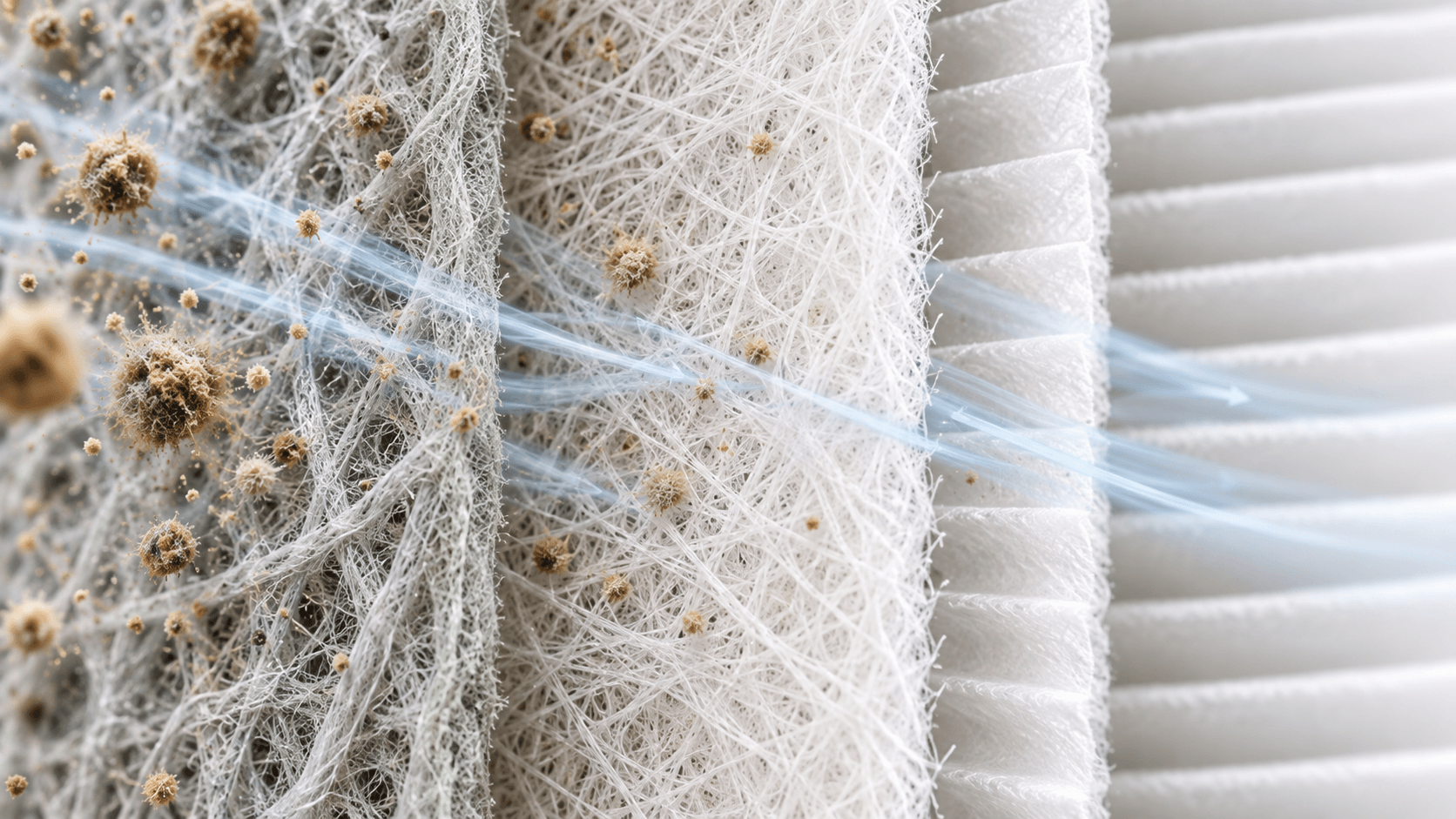
The filter catches some of the particles passing through the return duct. Better filters can capture smaller particles, but only while air is moving through them.
A filter sitting in an idle system isn’t cleaning much of anything.
3. It Controls Moisture
During cooling, the indoor coil removes heat and some water from the air. That water drains away through the condensate system.
If the equipment is oversized, it may cool the house too quickly and shut off before removing enough moisture. You end up with a cold, clammy home...which is not the luxury upgrade it sounds like.
Heating may also make winter air feel drier. Some homes need added humidity, while others need more moisture removed.
4. It Distributes Treated Air
Ductwork carries filtered and conditioned air through the house. Leaky return ducts may pull dust, insulation, or humid air from an attic, basement, or crawlspace.
Poor airflow can also leave some rooms with less filtration and moisture control than others.
Installation is part of the solution.
What Can an HVAC Filter Actually Remove?
The MERV rating tells you how well a filter captures particles between certain sizes. A higher number usually means better particle capture.
The EPA recommends MERV 13, or the highest-rated filter the system can handle.
That doesn’t mean every homeowner should grab the thickest filter on the shelf and shove it into a one-inch slot.
A restrictive filter can reduce airflow if the blower and filter rack weren’t designed for it. The filter also needs to fit tightly. Air will take the easy path around a loose filter because air is lazy like that.
A standard filter usually won’t remove:
- Radon
- Carbon monoxide
- Most chemical gases
- A mold colony growing on a wet surface
- Dust already sitting on furniture
- Every particle passing through the system
Filtration helps, but the EPA says it should support source control and ventilation, not replace them.
Can the HVAC System Make Air Quality Worse?
Yes, especially when the system is dirty, damaged, or poorly designed.
Common problems include:
- A clogged or poorly fitted filter
- A dirty indoor coil or blower
- Standing water in a drain pan
- A blocked condensate drain
- Leaky or damaged ductwork
- Poor airflow
- Equipment that is too large for the home
- A humidifier that isn’t maintained
- A fuel-burning furnace with a safety problem
The HVAC system may not create the original pollutant, but it can spread it throughout the home.
How Can Homeowners Improve Indoor Air Quality?
The best solution depends on the actual problem. I normally think about IAQ in this order.
1. Control the Source
Stop pollution before trying to filter it.
Fix water leaks. Vent the clothes dryer outdoors. Use a kitchen hood that exhausts outside. Store chemicals safely. Don’t smoke indoors. Keep vehicles and fuel-burning equipment out of attached living areas.
If mold is growing because a pipe leaks, an air purifier isn’t the repair.
Fix the pipe.
2. Add the Right Ventilation
Ventilation removes stale indoor air and brings in outdoor air. Bathroom fans and kitchen exhaust hoods remove moisture and pollution near the source.
Opening windows may help when the outdoor air is clean and the weather allows it. It may make things worse during wildfire smoke, high pollen, extreme humidity, or heavy outdoor pollution.
A whole-home ventilator can provide more controlled air exchange. Some systems also recover heat or energy before the outdoor air enters the home. The Department of Energy explains that whole-home ventilation uses fans and ducts to exhaust stale air, supply fresh air, or do both.
3. Keep Humidity Under Control
The EPA generally recommends keeping indoor relative humidity between 30% and 50%.
Too much moisture can support mold, dust mites, and musty odors. Too little can cause dry skin, static, and irritated noses or throats.
The best level may change with the weather. During very cold weather, some homes need lower indoor humidity to prevent water from forming on windows and walls.
4. Improve Filtration Without Hurting Airflow
Use the best filter your system can safely handle. Make sure it fits correctly, and check it often.
A filter doesn’t need to look like a shag carpet before it gets changed. Homes with pets, smoke, construction dust, or heavy system use may need more frequent changes.
If standard filtration isn’t enough, a larger media filter or dedicated whole-home HEPA system may help. True HEPA filtration often needs its own airflow design because many normal HVAC blowers can’t push enough air through it.
5. Match Added Equipment to the Problem
Different IAQ products do different jobs.
- UV light: Helps control biological growth on wet HVAC surfaces when sized and installed correctly. It doesn’t remove dust or gases.
- Activated carbon: May help with certain odors and gases, but the amount of carbon and contact time matter.
- Dehumidifier: Removes moisture when the air conditioner can’t keep up.
- Humidifier: Adds moisture during dry weather and must be kept clean.
- Ventilator: Brings in and manages outdoor air.
- Ionization: May support particle control in some systems, but product testing, placement, airflow, and ozone emissions matter.
Avoid any product designed to fill an occupied home with ozone. The EPA warns that ozone is a lung irritant, even when the machine has a very impressive name and a glowing blue light.
How Do You Test Indoor Air Quality?
Start with the problem you’re trying to understand.
Basic home monitors may measure temperature, humidity, fine particles, carbon dioxide, or a general VOC estimate. They’re useful for spotting patterns, but one sensor can’t test for everything.
The EPA notes that a particle monitor won’t warn you about radon or carbon monoxide.
Every home should have working smoke and carbon monoxide alarms. Homes should also be tested for radon with a proper radon test.
A professional IAQ assessment should combine measurements with an inspection of the home and HVAC system. A meter reading without context is just a number.
Indoor Air Quality and HVAC FAQs
Does My Air Conditioner Bring in Fresh Air?
Usually not. Most central residential systems recirculate indoor air unless they include a dedicated outdoor-air connection or ventilator.
Will a Better Filter Fix Poor Indoor Air Quality?
It can reduce airborne particles, but it won’t fix every problem. Filters don’t repair water leaks, remove radon, stop carbon monoxide, or replace ventilation.
Is a Higher MERV Rating Always Better?
Only if the system can maintain proper airflow. A technician can check the filter size, pressure drop, blower setup, and duct design before you upgrade.
Can I Improve IAQ Without Buying New Equipment?
Yes. Fixing leaks, using exhaust fans, removing pollutant sources, changing filters, and maintaining the HVAC system may make a major difference.
Is One Air Purification Product Enough?
Usually not. A complete IAQ plan may include source control, filtration, humidity control, ventilation, and regular maintenance.
No single box handles every pollutant.
The Simple Answer
Indoor air quality is the condition of the air your family lives in. Your HVAC system can filter particles, move air, control temperature, remove some moisture, and support other IAQ products.
But the HVAC system can’t do everything by itself.
The best results come from finding the real problem and matching the solution to it. Sometimes that means better filtration. Sometimes it means ventilation, humidity control, or fixing a water leak.
Start with the house. Then look at the system. Then choose the equipment.