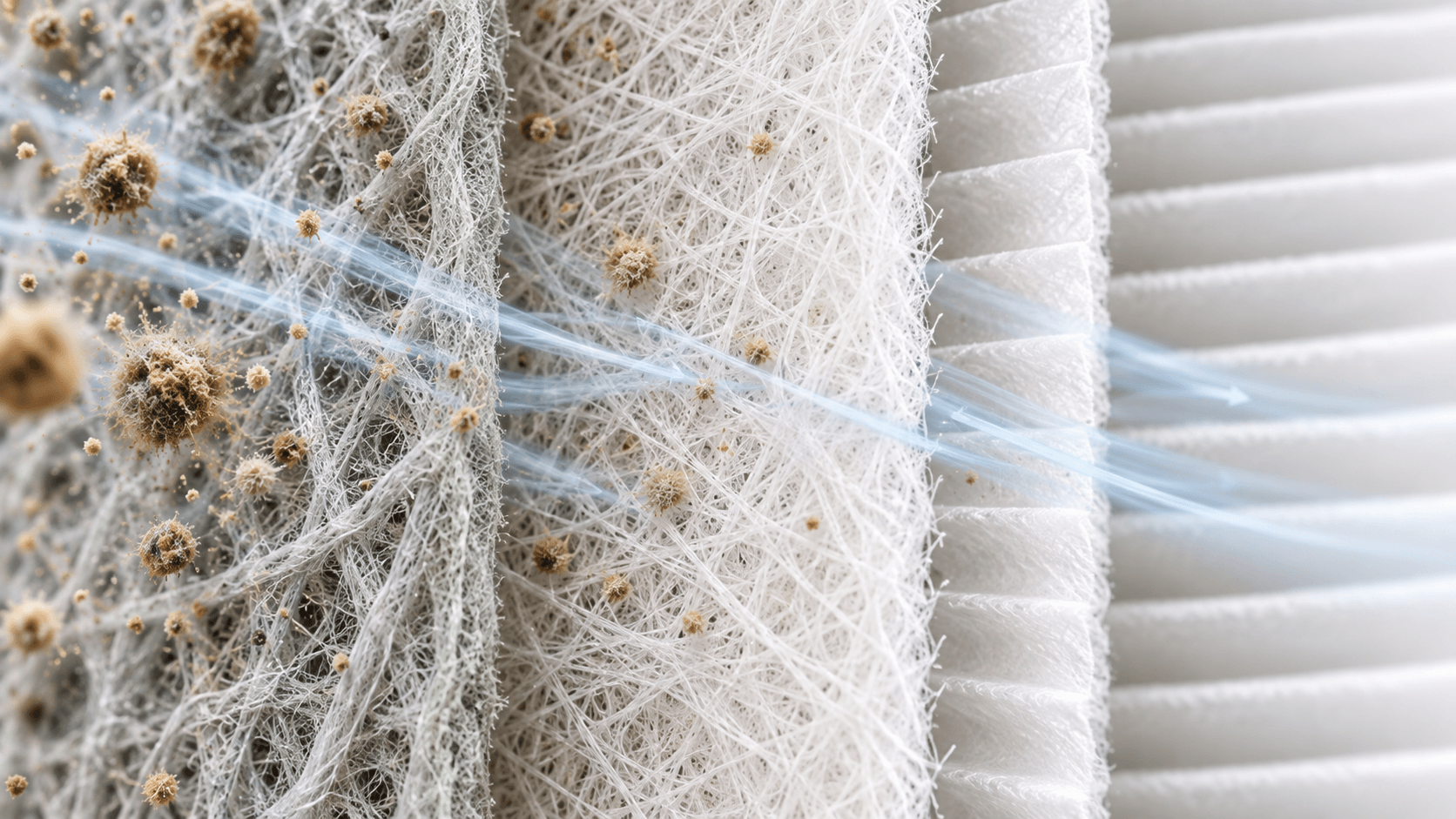
Is Your HVAC Filter Actually Cleaning The Air In Your Home?
That dirty filter proves it caught something, but it doesn’t prove your whole home has clean air. I’ll explain why basic filters mainly protect HVAC equipment, what it takes to catch smaller particles, and how to upgrade without choking off airflow.
Take control of your indoor air quality.
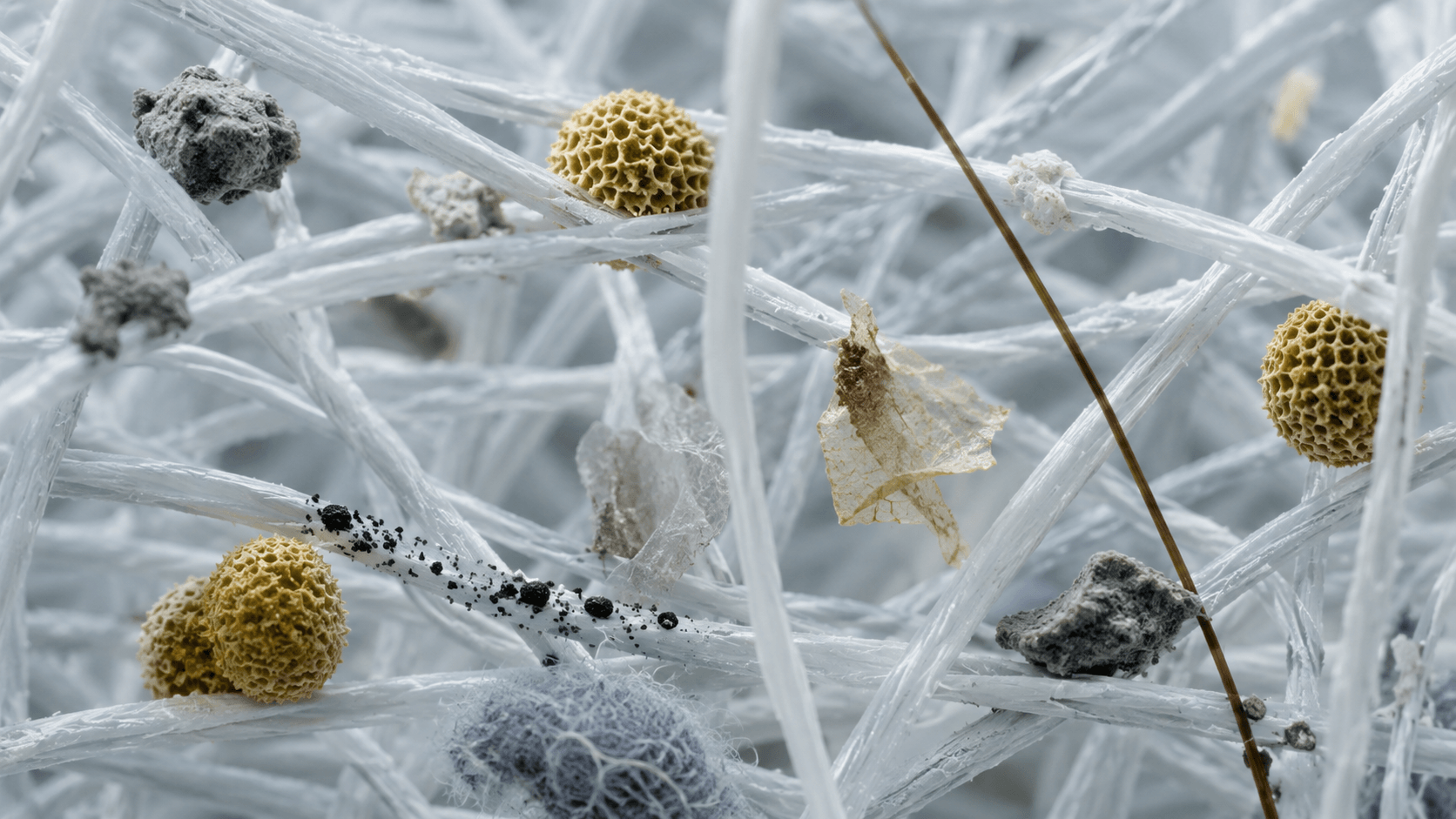
Most people pull a dirty filter from their furnace and think, “Well, that thing must be cleaning the house.”
It is catching something. That part is clear.
But a dirty filter doesn’t prove that it’s removing the smaller particles you breathe. It also doesn’t prove that air from every room is reaching the filter.
Your HVAC filter may be doing a great job protecting your equipment while doing very little for the air in your living room.
Both things can be true.
The Short Answer
Yes, an HVAC filter can clean the air in your home.
How well it works depends on five things:
- The filter’s MERV rating
- How much air moves through it
- How long the blower runs
- How tightly the filter fits
- How well air moves between the rooms and return vents
A thin fiberglass filter may stop hair, lint, and large pieces of dust. That helps protect the equipment.
A better filter can also catch pollen, pet dander, fine dust, and some smoke particles. However, the HVAC system must be able to move enough air through it.
The filter and the system have to work together.
Why Your HVAC System Needs a Filter
Your HVAC system pulls air from the house through return vents. That air passes through the filter before reaching the blower, heating elements, and evaporator coil. Without a filter, dust can build up on those parts.
A dirty blower wheel can't move enough air. A dirty evaporator coil can’t absorb heat as well. Low airflow can hurt comfort, raise energy use, and sometimes cause an air conditioner coil to freeze. This is why basic filters exist.
Their main job is to keep larger debris out of the equipment. The cheap blue filters sold at many stores are often good enough to catch large junk. They’re usually not very good at catching fine particles.
That doesn’t make them useless. It just means equipment protection and air cleaning aren’t the same goal.
Air Has To Reach the Filter
A filter can only clean the air that passes through it.
Dust sitting on a bookshelf isn’t going to leap into the return vent out of respect for your new filter. It has to become airborne, travel through the room, reach a return, and pass through the filter.
The blower also has to be running.
Central HVAC filters only clean air while the system is running. Most systems run when the home needs heating or cooling. During mild weather, the system may sit off for long periods.
Closed bedroom doors and poor return-air paths can also limit circulation. One room may get plenty of filtered air while another room gets very little.
This is why a high MERV number alone doesn’t tell the full story.
What Does MERV Mean?
MERV stands for Minimum Efficiency Reporting Value. It tells you how well a filter captures particles between 0.3 and 10 microns.
A micron is very small. Many particles that affect indoor air are too small to see.
Here’s a simple way to look at common residential MERV ratings:
- MERV 1 to 4: Mainly catches lint, hair, and large dust. Mostly equipment protection.
- MERV 5 to 8: Better at catching larger dust, pollen, and some mold spores.
- MERV 9 to 12: Captures more fine dust, pet dander, and smaller particles.
- MERV 13: Offers much better control of fine particles, including some particles found in smoke.
The EPA recommends MERV 13, or the highest rating your system can handle.
Many homes use MERV 8 as the normal filter. It can protect the system and catch some common particles. Moving to MERV 11 or MERV 13 can provide a more meaningful air quality improvement.
Look for the actual MERV rating. Words like “premium,” “allergen defense,” and “maximum clean” sound nice, but they aren’t test results.
Can a Higher MERV Filter Hurt Your HVAC System?
It can, but the problem isn’t as simple as “high MERV is bad.”
Every filter creates some resistance to airflow. This resistance is called pressure drop. A dirty filter normally creates more pressure drop than a clean one.
If the filter is too restrictive, airflow may fall. That can lead to:
- Hot and cold rooms
- Longer heating or cooling cycles
- Higher blower power
- A frozen cooling coil
- A furnace that gets too hot
- More noise or whistling near the filter
However, two filters with the same MERV rating may have very different pressure drops.
A deep 4-inch or 5-inch media filter has more surface area than a 1-inch filter. That extra area may let it catch more particles without blocking as much airflow. The EPA’s technical review explains that deeper, heavily pleated filters can provide high efficiency with lower airflow resistance.
So don’t choose a filter by MERV alone.
A technician can measure system static pressure and airflow before and after an upgrade. Hope isn’t a test instrument... tbh, it barely qualifies as a plan.
A Loose Filter Lets Dirty Air Sneak Around It
Air takes the easiest path. If there’s a large gap around the filter, some air may go around the filter instead of through it. This is called bypass. A loose MERV 13 filter can perform worse than a tightly fitted MERV 8 filter.
Check these:
- The filter is the correct size
- The airflow arrow points toward the blower
- The filter isn’t bent or collapsing
- The filter rack closes tightly
- There aren’t large gaps around the edges
Return duct leaks can also pull dusty air from an attic, basement, garage, or crawlspace. In that case, replacing the filter may help, but sealing the duct leak is part of the solution.
What Your HVAC Filter Won’t Fix
Most HVAC filters are made to catch particles. They usually won’t remove gases or many odors.
A standard filter won’t solve:
- A gas or chemical leak
- Strong VOCs from paint or cleaning products
- A moisture problem causing mold
- High or low indoor humidity
- Dust already sitting on floors and furniture
- A dirty crawlspace leaking air into the home
Activated carbon may help with some gases and odors, but the amount of carbon matters. A thin black sheet doesn’t hold much material. It may help a little, but it isn’t magic.
A mold problem also needs moisture control and cleanup. Filtering a few mold spores while water keeps feeding the growth is like mopping the floor while the sink is still overflowing.
Is Your Filter Mainly Protecting Equipment?
Your current filter is probably doing more equipment protection than air cleaning if:
- It’s thin, blue, and easy to see through
- It has no MERV rating
- It’s rated MERV 1 through 4
- Air can pass around its edges
- Your blower rarely runs
- The filter is bent, wet, or badly clogged
- Dust or smoke stays in rooms with poor return airflow
A dirty filter doesn’t always mean it failed. It may mean it caught a lot of material. The problem starts when it becomes loaded enough to restrict airflow.
How To Improve Your Home’s Filtration
Start with the whole system, not the most expensive filter on the shelf.
1. Find Your Current MERV Rating
Check the filter frame or packaging. Also write down its exact size and thickness.
2. Inspect the Fit
Make sure air can’t easily slip around the sides. Install the filter with the arrow pointing toward the blower.
3. Check the Filter Often
I recommends checking filters monthly and changing them at least every six months. Homes with pets, smoke, remodeling dust, or heavy HVAC use may need changes sooner. Deep media filters may follow a longer schedule from the manufacturer.
4. Ask What Your System Can Handle
MERV 13 is a good target when the system supports it. Ask an HVAC professional to measure static pressure and airflow instead of guessing.
5. Consider a Deeper Filter Cabinet
A properly sized media cabinet can provide more filter area and better airflow than forcing a dense 1-inch filter into a small slot.
6. Use Portable HEPA Filtration Where Needed
A properly sized portable HEPA cleaner can help in a bedroom, nursery, or main living area. This can be a smart option when the central system can’t support better filtration.
7. Control the Source
Use kitchen and bathroom exhaust fans. Keep smoke outdoors. Seal return duct leaks. Control humidity. Clean with a HEPA vacuum. Bring in clean outdoor air when conditions allow.
Filtration works best as part of a complete indoor air quality plan.
Should You Run the Fan All the Time?
Running the fan longer sends more air through the filter. That can improve particle removal.
It can also use more electricity. In humid weather, constant fan operation may move moisture from a wet cooling coil back into the home.
Some thermostats have a “circulate” setting that runs the fan for part of each hour. This may provide more filtering without running nonstop. Whether that makes sense depends on the blower, climate, filter, and humidity level.
The Bottom Line
Your HVAC filter can clean the air, but you can’t assume that it does just because it looks dirty.
A basic filter mostly protects the equipment. Meaningful whole-home filtration needs a filter that captures smaller particles, fits tightly, gets enough airflow, and operates long enough to clean the air.
MERV matters, but so does everything else.