

I do not look at whole-home ionization as a magic box that fixes every air quality problem in a house. I look at it as one possible tool in a larger indoor air quality setup.
That matters because most homes with dust, odors, allergies, stale air, or pet dander problems usually have more than one thing going on. The filter may be too small. The return air may be weak. The ductwork may be dirty or leaking. The basement may be damp. The HVAC system may not be moving air long enough to make any air-cleaning product useful.
Whole-home ionization can help in certain situations, but it needs to be installed correctly, selected carefully, and matched to the actual problem in the home. It should not be treated as a replacement for good filtration, humidity control, source control, or basic HVAC maintenance.
What Homeowners Usually Notice First
Most homeowners do not start by asking about ionization. They usually start by describing what they notice in the house.
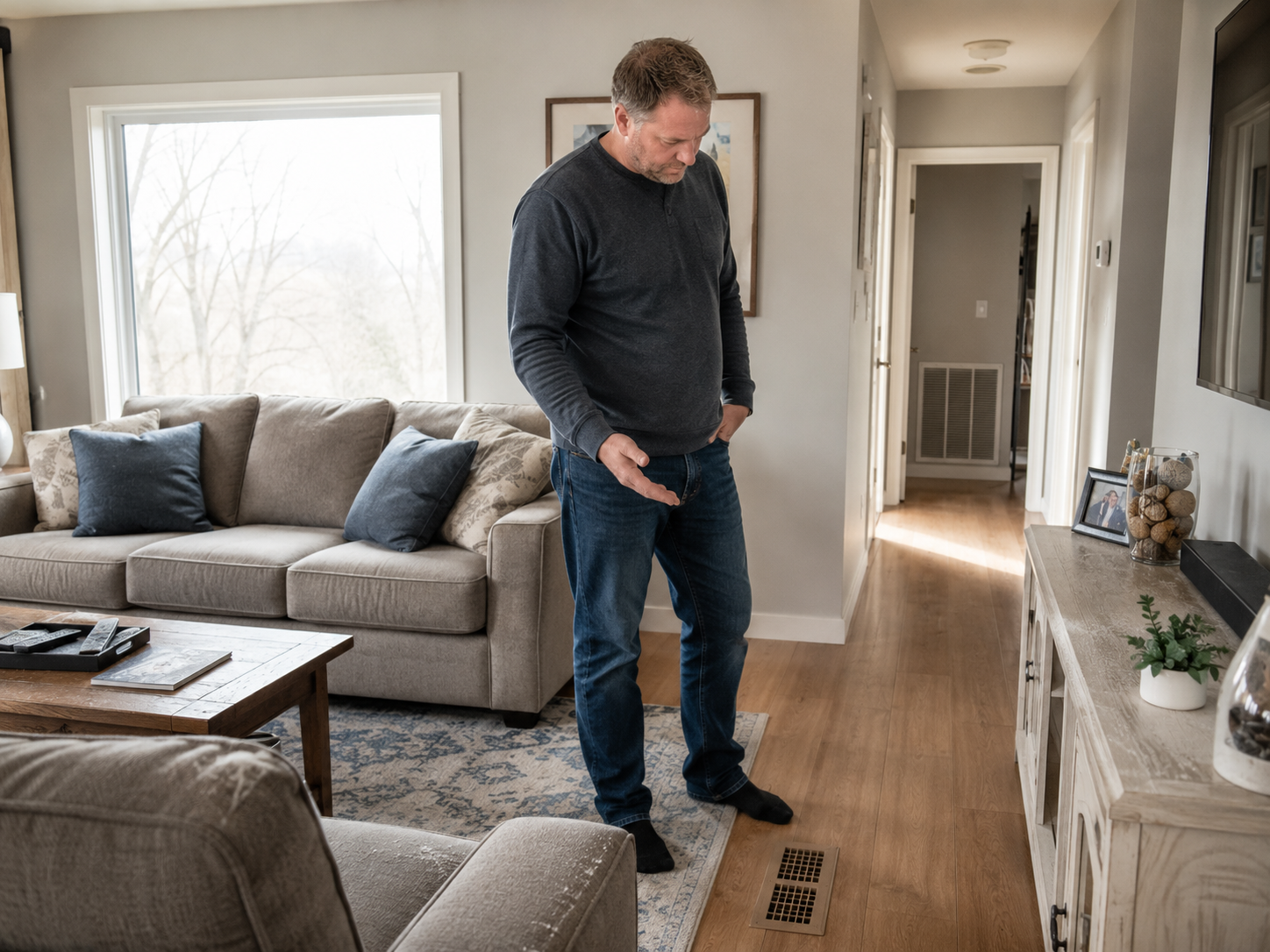
They may say the home feels stale, even when the HVAC system is running. They may notice odors from pets, cooking, musty areas, or the basement. Some people notice dust showing up quickly after cleaning, especially on dark furniture, electronics, or near supply vents.
Other times, the complaint is more seasonal. Spring pollen gets tracked inside, the filter loads up faster, and the house feels like it never fully clears out. In homes with pets, the concern is usually dander, hair, odor, and particles moving through the return side of the system.
The common complaints I hear are usually things like:
- Dust returning quickly after cleaning
- Odors when the HVAC system starts
- Pet smells that linger in certain rooms
- Stale air in bedrooms or finished basements
- Dirty filters that load up faster than expected
- Particles collecting around vents or returns
- Allergy-type discomfort feeling worse indoors
Those symptoms do not automatically mean the home needs ionization. They mean the air quality problem needs to be looked at as a system.
What Is Actually Happening
Ionization works by releasing charged particles into the air stream. Those charged particles can interact with airborne particles, which may make some contaminants easier to capture, cluster together, or fall out of the air.
That sounds simple, but the real-world performance depends heavily on the home and the HVAC system.
The air has to move. The equipment has to be installed in the right location. The blower has to run long enough. The filter still needs to catch what the system brings back. If the system barely runs, has poor return airflow, or uses a cheap thin filter, ionization by itself is not going to overcome those problems.
This is one reason I do not like when ionization is sold as a standalone cure-all. A whole-home ionization installation should be part of a larger indoor air quality plan, not a shortcut around basic HVAC fundamentals.
Why the HVAC System Matters
Your HVAC system is the main air mover in the home. When the blower runs, it pulls air from the living space through the return ducts, sends it through the filter and equipment, then pushes it back out through the supply ducts.
That repeated circulation is what makes whole-home air purification possible.
But it also means any weakness in the HVAC system affects the performance of the air-cleaning equipment. A better air purification product cannot fully compensate for a restricted filter, dirty blower wheel, leaking return duct, dirty evaporator coil, or poor system airflow.
If ionization is installed in the duct system, I want to know how the air is moving through that duct system. I also want to know whether the filter can handle the particles being returned to it. In many cases, the filter cabinet, return air design, and static pressure matter just as much as the ionization device itself.
A good installation is not just mounting a device and walking away. It should include looking at the system around it.
Common Causes or Contributing Factors
Before recommending whole-home ionization, I would want to understand what is actually contributing to the homeowner’s complaint. Some of the most common issues include:
- Low-quality filtration: A thin, low-grade filter may protect the equipment from large debris, but it may not do much for smaller airborne particles.
- High static pressure: If the system is already struggling to breathe, adding restrictive filtration or extra equipment without checking airflow can make performance worse.
- Poor return air design: Weak or undersized return air can limit how much air actually makes it back through the system to be cleaned.
- Duct leakage: Leaky return ducts can pull in dust, attic air, basement air, crawlspace air, or other contaminants.
- High indoor humidity: Humidity can make odors stronger and can contribute to musty conditions in basements, crawlspaces, and duct systems.
- Dirty coils or blower components: A dirty evaporator coil or blower wheel can reduce airflow and contribute to odor complaints.
- Pet dander and household particles: Homes with pets often need better filtration and more consistent air movement.
- Poor ventilation: A tight or stale home may need controlled fresh air or better air exchange, not just air treatment.
Ionization may help reduce certain airborne particle and odor complaints, but it should not be the only thing being considered.
What Can Help
The best indoor air quality setup usually combines multiple practical improvements. Not every home needs every solution, but most homes benefit from starting with the basics.
In a home where whole-home ionization makes sense, I would usually think about it alongside options like:
- Better media filtration: A properly sized media filter can capture more particles without choking the system if it is selected correctly.
- HEPA filtration: In some homes, bypass HEPA or dedicated filtration may be a better fit for particle control.
- Ionization: A properly selected whole-home ionization system may help with certain airborne particles and odors when used as part of a complete system.
- Humidity control: Dehumidification can make a big difference in homes with musty smells, basement moisture, or damp indoor air.
- UV lights: UV lights can be useful near the evaporator coil to help keep coil surfaces cleaner, depending on the application.
- Duct inspection: If the ductwork is leaking, dirty, damaged, or poorly designed, air purification equipment may not perform like expected.
- System maintenance: Clean coils, clean blower components, proper airflow, and regular filter changes still matter.
The biggest thing is matching the solution to the problem. A pet odor issue, a damp basement issue, a pollen issue, and a dirty duct issue may all feel like “bad air,” but they may need different fixes.
Whole-Home Ionization Installation Considerations
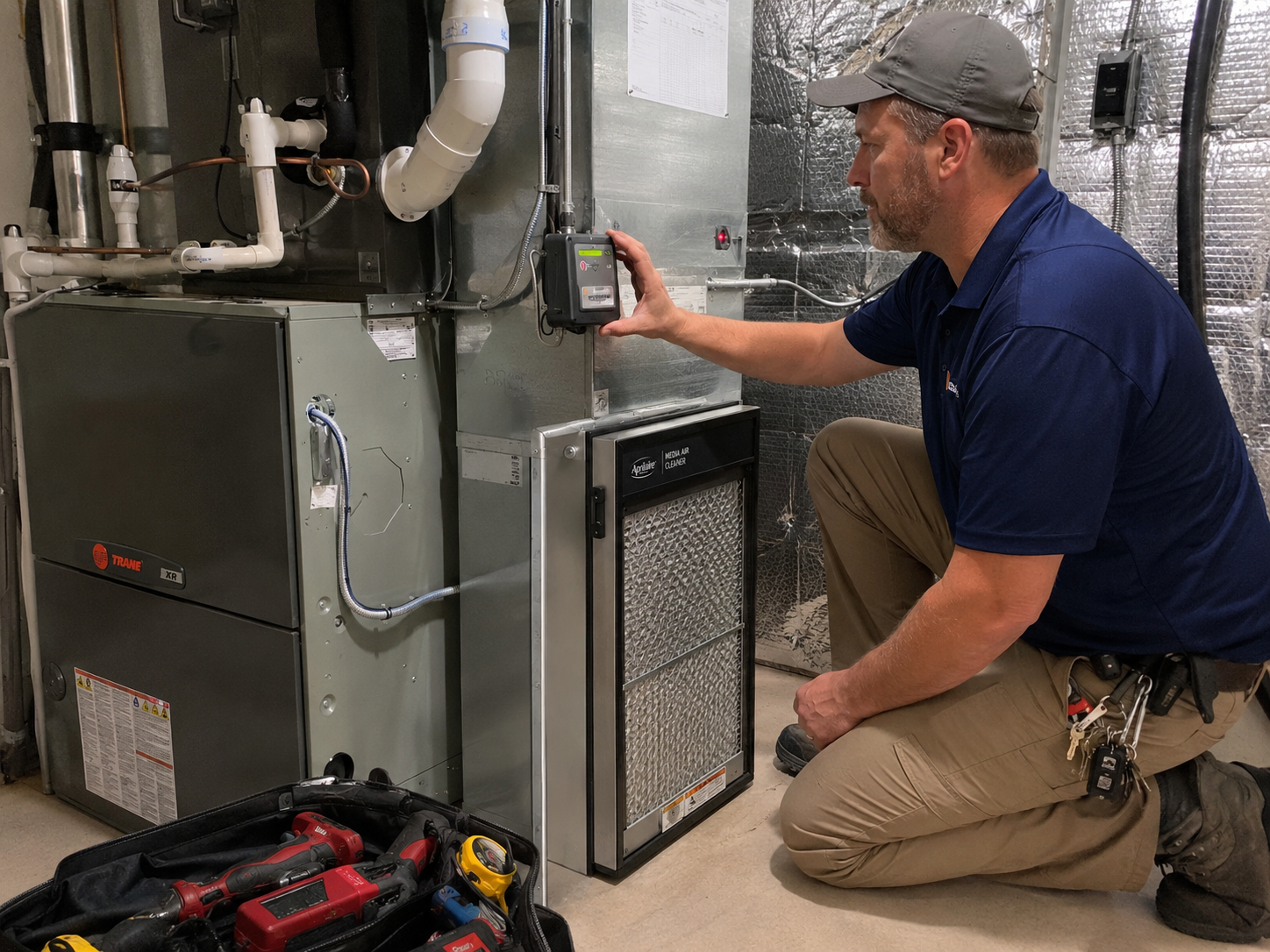
When ionization is installed into an HVAC system, placement matters. The device needs to be installed where it can properly interact with the air moving through the system. Depending on the equipment and manufacturer requirements, that may be near the supply plenum, return side, or air handler cabinet.
I also care about access. If the device needs cleaning, inspection, or replacement parts later, it should not be buried in a spot where nobody can service it.
The electrical side matters too. These devices need to be wired properly, secured correctly, and installed according to the manufacturer’s instructions. I do not like sloppy wiring, loose mounting, or installations where nobody explains how the system works to the homeowner.
A homeowner should understand:
- What the ionization system is intended to help with
- Where it is installed
- Whether it requires maintenance
- Whether it has replaceable parts
- How it works with the existing filter
- Whether the HVAC blower needs longer runtime
- Whether the device is designed to avoid intentional ozone production
That last point is important. I do not recommend using air-cleaning products that intentionally produce ozone in occupied homes. If I am looking at ionization, I want equipment that is designed for residential HVAC use and has appropriate safety testing and documentation.
What I Would Look At First
Before I recommended whole-home ionization installation, I would start with the HVAC system and the homeowner’s actual complaint.
I would want to see the filter size, filter type, and filter cabinet. A lot of homes are trying to clean all the air in the house through a filter that is too small or too restrictive for the system. That can create airflow problems and still not give the homeowner the air quality improvement they expected.
I would also look at the return air setup. If the system does not have enough return air, or if return ducts are pulling from dirty areas, then the system is fighting itself. You cannot solve every return air problem with an air purifier.
Humidity is another big one. If the house has a musty basement, damp crawlspace, or indoor humidity that stays too high, I would rather identify that moisture problem than pretend an ionization system is going to fix it by itself.
Here is what I would usually check first:
- Filter type, size, and condition
- Static pressure and airflow
- Return air design
- Duct leakage or contamination concerns
- Evaporator coil cleanliness
- Blower wheel condition
- Indoor humidity levels
- Basement or crawlspace moisture
- Odor source and when the odor occurs
- System runtime and fan settings
- Equipment age and maintenance history
That inspection tells me whether ionization belongs in the conversation or whether the home needs a different solution first.
When Ionization Makes Sense
Whole-home ionization may make sense when the HVAC system is in good enough condition to support it, the homeowner has realistic expectations, and the installation is part of a broader air quality plan.
For example, a home with pets, decent ductwork, acceptable airflow, and a good media filter may benefit from adding ionization as another layer of air treatment. A home with mild odor complaints and consistent air circulation may also be a reasonable candidate.
But if the home has a dirty coil, poor airflow, duct leakage, high humidity, or a weak filter setup, I would want to address those issues first.
Indoor air quality is not about adding the most equipment possible. It is about finding the weak points and fixing the ones that matter.
Final Thoughts
Whole-home ionization installation can be useful in the right home, but it needs to be approached honestly. It should not be sold as a cure for every dust, odor, allergy, or air quality complaint.
The HVAC system still matters. Filtration still matters. Humidity still matters. Ductwork still matters. Source control still matters.
At American Air Purification, my goal is to help homeowners understand what is actually happening in their home before they spend money on a solution. Cleaner indoor air usually starts with understanding the system, the home, and the source of the problem.
Ionization may be part of that solution, but it should be selected and installed with real HVAC knowledge behind it.
A whole-home ionization system is installed into the HVAC system to help treat air as it moves through the ductwork. The system releases charged particles into the air stream, which may help certain airborne particles cluster together or become easier to capture through filtration. I look at ionization as one layer of indoor air quality, not a replacement for good filters, proper airflow, humidity control, or HVAC maintenance.
No. Ionization does not replace the air filter. The filter still does the actual job of capturing particles as air returns through the HVAC system. If the filter is too small, too weak, dirty, or causing airflow problems, ionization alone is not going to fix the system. In most homes, filtration should be evaluated before or during any ionization installation.
A properly selected and installed residential ionization system should be designed for use in occupied homes. That said, I do not recommend air-cleaning products that intentionally produce ozone. Before installing ionization, I would want to look at the product specifications, how it is tested, where it will be installed, and whether it fits the HVAC system. The goal should be cleaner air without creating new indoor air quality concerns.
No air purification product should be promised as a complete fix for dust, odors, or allergy concerns. Ionization may help with certain airborne particles and some odor complaints, but results depend on the home, the HVAC system, the filter setup, humidity levels, duct condition, and the source of the problem. If dust is coming from duct leakage, poor filtration, or a dirty return system, those issues need to be addressed too.
Before I recommended whole-home ionization, I would want to look at the filter setup, static pressure, ductwork, return air design, blower condition, evaporator coil cleanliness, humidity levels, and the homeowner’s actual complaint. That inspection matters because ionization works best when the HVAC system is already moving air properly and the home has the right supporting setup. The right solution depends on what is actually causing the air quality issue.